
AMD Ryzen 9 9900X
4.8Editor score
12 Cores 24 Threads
Zen 5 architecture base
Affordable high performance
This expert guide compares the best CPUs for Machine Learning workloads, evaluating performance, core counts, and AI acceleration features for developers.
Selecting the right processor is crucial for efficient machine learning development. Modern CPUs must balance core counts, cache sizes, and integrated AI accelerators to handle demanding training and inference tasks locally.
We evaluated ten top processors based on architecture, memory bandwidth, and ecosystem support. Our analysis focuses on real-world performance for data scientists and engineers building models at home or in small offices.
Each pick highlights specific strengths like parallel processing power or unified memory pools. Prices and availability change frequently, so verify current stock and costs before making your final purchasing decision today.
4.8Editor score

5.0Editor score

5.0Editor score
The following table provides a side-by-side comparison of all ten processors. It highlights key specifications such as core counts, clock speeds, and specific architectural features relevant to machine learning tasks.


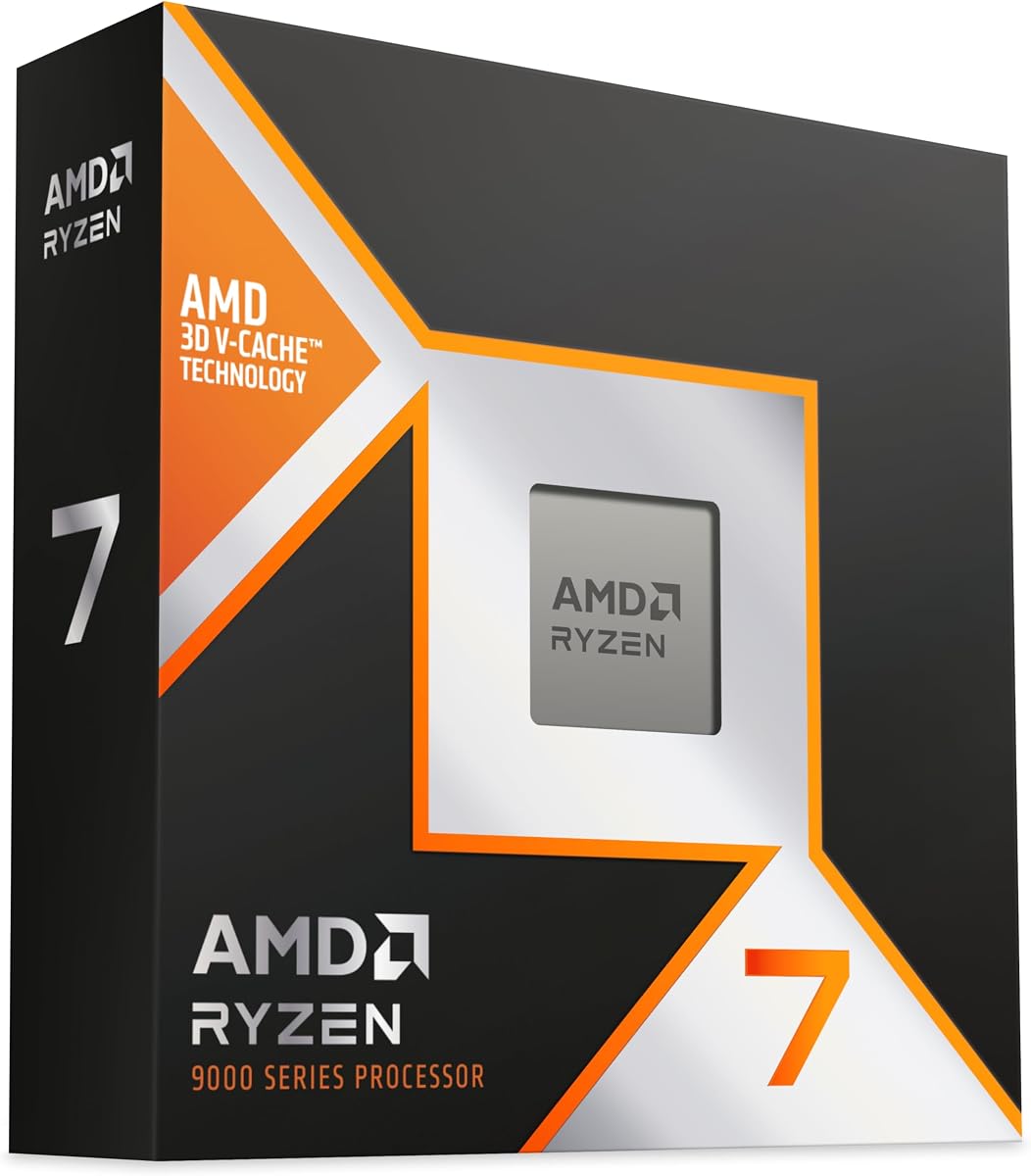

The NVIDIA DGX Spark 2 Pack stands out as the premier choice for serious machine learning development. With a perfect 5.0 rating, it offers supercomputer performance directly on your desk for local training.
We may earn a commission when you buy through this link, at no additional cost to you.
Its Grace Blackwell architecture delivers up to 1 petaFLOP of AI performance. This allows for rapid iteration on large models with up to 200 billion parameters using 128GB of unified memory per unit.
While the cost is significant, the efficiency gained in development time justifies the investment. You avoid cloud costs and latency issues by keeping sensitive data and heavy workloads local.
This system is ideal for professionals needing enterprise tools without enterprise infrastructure. It empowers rapid testing and validation in a secure, high-performance setting for AI innovation.
You gain the freedom to experiment and prototype faster without relying on external cloud resources.
The shared memory pool across CPU and GPU enables efficient processing of large model parameters.
We may earn a commission when you buy through this link, at no additional cost to you.
The AMD Ryzen 9 9900X offers a compelling balance of price and performance for entry-level machine learning work. Its 4.8 rating reflects strong reliability and efficiency across diverse workloads.
We may earn a commission when you buy through this link, at no additional cost to you.
With 12 cores and 24 threads, it handles parallel data processing tasks efficiently. The Zen 5 architecture ensures high IPC uplift and great power efficiency for sustained training runs.
It lacks dedicated AI hardware found in specialized cards, making it a general purpose processor. However, for smaller models or pre-processing tasks, it provides ample power at a reasonable cost.
Developers looking to build a capable workstation without overspending should consider this option. It supports PCIe 5.0 on select motherboards for future expansion of GPU resources.
The 12 cores provide significant parallel processing power for multithreaded data pipelines.
The AM5 platform ensures long-term support and upgrade paths for your system.
We may earn a commission when you buy through this link, at no additional cost to you.
The AMD Ryzen AI Halo is a purpose-built developer platform designed specifically for local AI tasks. Its perfect 5.0 rating highlights its effectiveness for those working with intensive workloads locally.
We may earn a commission when you buy through this link, at no additional cost to you.
Featuring 128GB of unified memory and a 50 TOPS NPU, it supports large model inference effortlessly. The Zen 5 architecture paired with Radeon graphics provides a balanced hardware profile.
This device is optimized for Linux users needing a dedicated environment for AI development. It includes preloaded tools and workflows to streamline your building and running process.
It is best suited for developers who want a complete, ready-to-use solution. The connectivity options like Wi-Fi 7 ensure seamless integration into your existing network setup.
The XDNA 2 NPU offloads AI tasks from the main CPU for faster inference.
128GB of shared memory allows seamless data access across CPU and GPU.
We may earn a commission when you buy through this link, at no additional cost to you.
This single unit version of the DGX Spark offers similar powerful capabilities in a compact form. It rates 4.4 based on its robust design for enterprise-scale AI at your desk.
We may earn a commission when you buy through this link, at no additional cost to you.
Delivering up to 1 petaFLOP of performance, it handles local model fine-tuning and analytics efficiently. The architecture is built from the ground up to support your development needs.
You gain the freedom to prototype faster than traditional cloud setups allow. It is particularly useful when you need to test ideas without network latency issues.
It is an excellent choice for innovators needing high-performance resources securely. The ROI increases through higher productivity and faster deployment cycles for your projects.
Develop locally and deploy anywhere with full NVIDIA AI software stack support.
Keep your models and data on-premise for better security and control.
We may earn a commission when you buy through this link, at no additional cost to you.
The AMD Ryzen 9 9950X3D brings 16 cores of power for demanding computing tasks. Its 4.7 rating indicates strong performance for content creation and heavy data processing.
We may earn a commission when you buy through this link, at no additional cost to you.
With a boost clock up to 5.7GHz, it delivers fast execution for complex algorithms. The Zen 5 architecture ensures efficient power usage even under heavy loads.
While optimized for gaming, its core count helps with parallelizable data pre-processing. It offers a high baseline for workstations needing raw CPU performance without specialized AI chips.
This processor is suitable for those who prioritize raw compute power. It requires a compatible AM5 motherboard to unlock its full potential in your setup.
The high boost clock ensures fast execution times for single-threaded tasks.
16 cores allow extensive parallel processing for large datasets.
We may earn a commission when you buy through this link, at no additional cost to you.
The Intel Core Ultra 9 285K features a hybrid architecture that balances performance and efficiency. It rates 4.6 for its ability to run cooler and quieter under load.
We may earn a commission when you buy through this link, at no additional cost to you.
With 24 cores including P-cores and E-cores, it handles diverse workloads effectively. This is particularly useful for tasks that mix background processing with active model training.
The unlocked speed allows you to push performance limits if cooling permits. It supports PCIe 5.0 ensuring compatibility with the latest high-bandwidth peripherals and storage.
This CPU is a solid choice for mixed-use workstations. It is ideal for those needing a powerful general-purpose processor for development tasks.
Two microarchitectures prioritize and distribute workloads to optimize performance.
The design ensures your PC runs cooler and quieter during intense sessions.
We may earn a commission when you buy through this link, at no additional cost to you.
The AMD Ryzen 7 9800X3D is built on Zen 5 technology with Next Gen 3D V-Cache. It holds a 4.8 rating for its efficiency and performance balance in general tasks.
We may earn a commission when you buy through this link, at no additional cost to you.
With 8 cores and 16 threads, it delivers solid throughput for standard development workflows. The high L3 cache helps with fast data access during processing steps.
While not a dedicated server chip, it handles pre-processing steps efficiently. It is a good option for developers focusing on lightweight models or inference work.
Its power efficiency ensures stable performance without excessive heat. It is a reliable choice for a balanced home workstation setup.
96MB L3 cache allows better thermal performance and higher clock speeds.
High IPC uplift ensures great power efficiency during standard workloads.
We may earn a commission when you buy through this link, at no additional cost to you.
The Intel Core i9-14900K offers 24 cores and 32 threads for robust multitasking. Its 4.2 rating reflects strong raw speed capabilities for demanding applications.
We may earn a commission when you buy through this link, at no additional cost to you.
With a max clock speed of up to 6.0GHz, it ensures rapid responsiveness. This makes it suitable for tasks that benefit from high single-core performance.
It supports DDR5 platform support to cut load times significantly. This helps in loading large datasets quickly before processing begins.
This processor is best for those needing high frequencies. It is a solid option for workstations requiring raw power over efficiency.
Up to 6.0GHz speed ensures rapid responsiveness during active development.
Support for DDR5 platform supports faster data transfer speeds.
We may earn a commission when you buy through this link, at no additional cost to you.
The AMD Ryzen 7 9850X3D is a high-performance desktop processor with 3D V-Cache. It holds a 4.8 rating for reliable and fast execution of instructions.
We may earn a commission when you buy through this link, at no additional cost to you.
This processor is designed for efficient multitasking with high reliability. The cache memory enables improved system performance during intensive data operations.
It uses 5 nm process technology for reliable performance with maximum productivity. This ensures you can run complex tasks without overheating issues.
This CPU is suitable for users prioritizing cache performance. It supports rapid access times for faster processing speed across applications.
L3 cache memory enables excellent hit rate in short access time.
5 nm process technology ensures reliable performance with maximum productivity.
We may earn a commission when you buy through this link, at no additional cost to you.
The AMD Ryzen 7 7800X3D provides dependable execution of tasks with maximum efficiency. Its 4.8 rating reflects consistent performance across various workloads.
We may earn a commission when you buy through this link, at no additional cost to you.
Octa-core design allows multitasking with great reliability and fast speed. The 5nm process ensures reliable performance for standard development operations.
While optimized for gaming, it handles general development tasks well. The cache memory enables excellent hit rate for short access time.
It is a cost-effective option for lighter machine learning tasks. The integrated graphics output provides basic visual support without extra cards.
Processor provides dependable execution of tasks with maximum efficiency.
L3 cache memory enables excellent hit rate in short access time.
We may earn a commission when you buy through this link, at no additional cost to you.
Choosing the right CPU involves weighing core counts, cache, and architecture. Here are the key factors to consider before buying.
More cores allow for better parallel processing of data pipelines and model training steps. High thread counts ensure that background tasks do not interrupt your main development workflow.
Look for at least 8 cores for standard tasks and 16 for heavy workloads.
Cache memory stores frequently accessed data to reduce latency and speed up computations. A larger L3 cache is particularly beneficial for repetitive model inference tasks.
Prioritize models with large cache sizes for faster data access.
High clock speeds reduce the time required for single-threaded operations like compiling code. Boost speeds allow the processor to run faster during intense peaks of activity.
Ensure high boost clocks to minimize idle time during training.
The CPU must support DDR5 memory for high bandwidth data transfer. Compatibility with high speed memory modules prevents bottlenecks during large dataset processing.
Check for DDR5-5600 support to ensure fast data throughput.
Modern architectures like Zen 5 or hybrid designs offer better power efficiency and IPC. Efficient designs reduce heat output which helps maintain stable performance over long periods.
Choose newer generations for better performance per watt ratios.
Ensure the CPU fits your motherboard socket to avoid compatibility issues. AM5 and Intel 800 series boards offer long-term support for future upgrades.
Select a socket that supports your planned upgrades for longevity.
Integrated graphics can handle basic display tasks without needing a dedicated GPU. This is useful for debugging and visualizing data during early development stages.
Consider processors with integrated graphics for initial setup ease.
Effective thermal management ensures the processor stays cool under load. High TDP units require robust cooling solutions to prevent throttling during training runs.
Invest in quality cooling to maintain sustained performance.
Ensure your motherboard BIOS is updated to support the latest CPU features. This unlocks optimized performance settings and stability for new processor generations.
Install proper thermal paste and a quality cooler to manage heat output. Stable temperatures are vital for maintaining performance during long training sessions.
Monitor your system temperature regularly using software tools. This helps prevent thermal throttling and extends the lifespan of your hardware.
For most local development tasks, 8 to 12 cores are sufficient. Larger datasets or complex models benefit from 16 or more cores to handle parallel processing efficiently.
Both offer strong performance but AMD currently leads with unified memory options. Intel provides solid hybrid architectures for general tasks.
For heavy training, a dedicated GPU is still recommended. These CPUs handle data pre-processing and inference for smaller models effectively.
These CPUs are designed for local work. Cloud training relies on the remote data center hardware for actual model computation.
Optimize your software to use multi-threading. Ensure cooling is adequate to maintain high boost clocks during intensive tasks.
The AMD Ryzen 9 9900X offers strong value for the price. It balances core count and clock speed well for entry-level development.
We highlighted ten distinct processors ranging from local AI supercomputers to powerful workstation chips. Each offers unique advantages for different scales of development work.
Prioritize core count and memory support based on your specific model size. Ensure your system has adequate cooling for stable performance.
Remember to verify current availability and pricing before purchase. Technology evolves quickly so check that the product meets your current needs today.