
JOYO Guitar Audio Interface for Phone
4.2Editor score
Zero latency monitoring
Pocket sized portability
Plug and play setup
Finding the right audio interface for guitar can transform your home studio setup. Whether you play acoustic, electric, or bass, the right gear ensures clean signal capture and low latency monitoring. This selection highlights reliable models for beginners and professionals alike.
We evaluated each interface based on sound quality, connectivity options, and ease of use. Our comparison includes USB-C compatible devices, portable phone adapters, and robust desktop units. Each pick offers distinct advantages for different recording environments and budgets.
Every product entry displays key specifications, user ratings, and direct purchase links. While prices may fluctuate over time, these models remain top choices for guitarists. Check current offers before buying to ensure you get the best value available.
4.2Editor score
4.6Editor score

As an Amazon Associate we earn from qualifying purchases.
The following table provides a side-by-side comparison of all ten selected interfaces. Review the specs to identify the model that fits your recording needs and budget constraints.



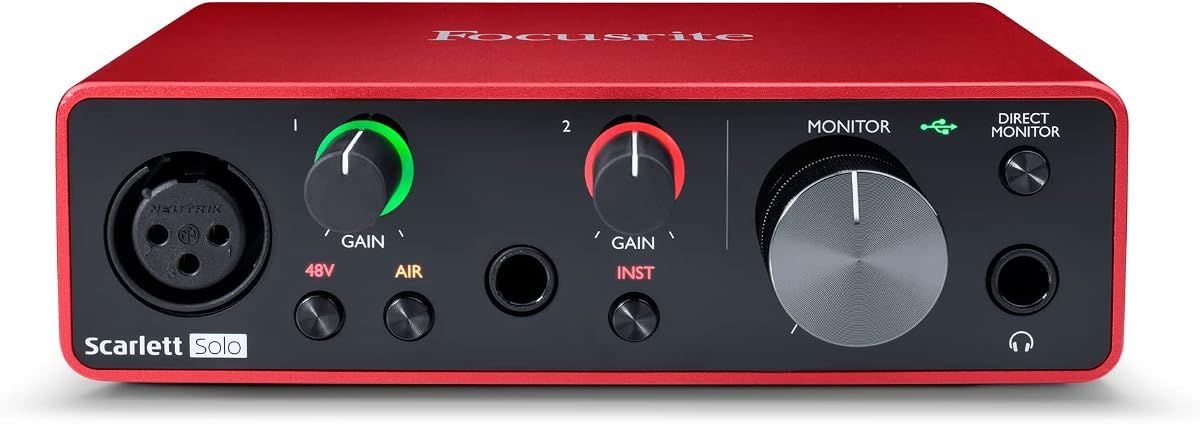
The Focusrite Scarlett Solo 3rd Gen stands out as a top choice for guitar recording. It boasts a 4.6 rating from users who appreciate its sound quality and reliability. This interface delivers pro performance with high-quality preamps that capture every nuance of your playing.
We may earn a commission when you buy through this link, at no additional cost to you.
Its standout features include the Air mode which adds clarity to acoustic instruments. The Gain Halos help you set perfect levels without clipping. Two high-headroom instrument inputs ensure your guitar shines through. Studio-quality recording is possible with 24-bit/192kHz resolution.
While it lacks MIDI support, this is acceptable for guitar-focused setups. Some users note driver requirements on older systems but modern OS versions work smoothly. The included software suite adds value and gets you started immediately without extra purchases.
This interface suits beginners and semi-pros seeking reliable home studio gear. Its compact design fits small spaces while delivering professional results. If you need clean audio capture for guitar and vocals, this model is highly recommended for its consistent performance.
The high-performance converters ensure your recordings retain all sonic qualities without loss.
Includes Pro Tools Intro+, Ableton Live Lite, and Hitmaker Expansion to jumpstart your projects.
We may earn a commission when you buy through this link, at no additional cost to you.
The JOYO MOMIX CAB offers an affordable solution for guitarists recording on phones. With a 4.2 rating, it appeals to users wanting simplicity. It passes your clean signal directly to headphones with zero latency while sending audio to your device for recording.
We may earn a commission when you buy through this link, at no additional cost to you.
Its key strength is portability. Smaller than a key, it clips to pockets or straps. No drivers or batteries are required. The signal indicator light shows status clearly. This makes it ideal for capturing ideas anytime without setup hassle.
However, it does not support real-time software amp sims or effects processing. On Android, enabling OTG is mandatory which can confuse some users. These limitations are acceptable given the low price and focused use case for dry tracks.
Buyers prioritizing mobility and ease of use will love this interface. It works well for practice sessions backing tracks and live streaming. If you want a no-fuss tool for phone recording, this budget option delivers reliable performance.
Record song ideas at rehearsal or go live on social media anywhere inspiration strikes.
Hear your unprocessed guitar alongside app audio without delay for better timing.
We may earn a commission when you buy through this link, at no additional cost to you.
The M-AUDIO M-Track Duo is a versatile interface suitable for podcasting and music. It holds a 4.4 rating reflecting solid performance. With two combo inputs, it handles guitar and vocals simultaneously. This flexibility makes it great for solo artists or small bands.
We may earn a commission when you buy through this link, at no additional cost to you.
Its Crystal Preamps guarantee optimal sound from microphones including condenser types. The USB/Direct switch enables zero latency monitoring. Included MPC Beats software offers production tools from Akai Professional. Stereo outputs provide monitoring flexibility for mixing tasks.
While it only supports 48kHz which is lower than high-end models, it remains sufficient for most hobbyists. RCA outputs are not balanced which may introduce noise in long cable runs. These trade-offs are acceptable for the price point and feature set.
This interface is ideal for users needing two inputs without breaking the bank. It works well for home studios requiring vocal and guitar recording. If you value versatility and bundled software, the M-Track Duo is a strong contender.
Record guitar and vocals together with two combo XLR Line Instrument Inputs.
Includes MPC Beats with essential tools from Akai Professional for creative workflows.
We may earn a commission when you buy through this link, at no additional cost to you.
The IK Multimedia iRig USB brings professional recording to your desk. Rated 4.3 by users, it delivers 24-bit 48kHz resolution. It connects easily to iPad Mac and PC via USB-C. A dedicated Amp out lets you link your pedal rig seamlessly.
We may earn a commission when you buy through this link, at no additional cost to you.
Its universal compatibility stands out with selectable FX or THRU settings. Direct monitoring allows silent practice. The included USB-C cable ensures streamlined connection. Bundled software helps jumpstart your creative journey with plug-ins and recording tools.
Users should note it does not work properly with Lightning cables which limits iPhone options without adapter. Controls are basic but effective. These limitations are minor for those focused on USB-C workflows and amp integration.
Choose this if you need a compact durable interface with Amp out. It suits musicians wanting to blend digital recording with analog gear. If you value build quality and ease of use this iRig model is a reliable choice.
Connect to your amp rig with selectable FX processed or THRU direct settings.
Complete suite of recording software and plug-ins included for immediate creativity.
We may earn a commission when you buy through this link, at no additional cost to you.
The MAONO PS22 Lite targets streamers and recording enthusiasts. It earns a 4.2 rating for its high-resolution 24-bit/192kHz capture. The 106dB dynamic range ensures clear realistic sound. Designed for PC and Mac it simplifies setup with intuitive modes.
We may earn a commission when you buy through this link, at no additional cost to you.
ProStudio Routing Software adds virtual channels and loopbacks for broadcasting. ASIO drivers enable low-latency output. The dynamic light ring indicates input status clearly. Direct monitoring switch saves time for live sessions. It plays well with major DAWs like Pro Tools and Ableton.
Some users find initial software configuration complex on specific systems. The compact size may limit connectivity for expanded setups. These issues are minor considering its price and feature focus. It remains a strong option for content creators.
This interface is perfect for beginners starting in streaming. It handles guitar and vocals with impedance adjustment. If you need a versatile tool for broadcast and music this MAONO interface offers excellent value and performance.
ProStudio Routing Software opens virtual channels and loopbacks for flexible broadcasts.
Capture every detail with 24-bit/192kHz recording for professional sound quality.
We may earn a commission when you buy through this link, at no additional cost to you.
This 2X2 Audio Interface delivers high-fidelity studio quality. With a 4.3 rating it supports 24-bit/192kHz resolution. USB-C port handles data and power eliminating external supplies. Two combo jacks connect any source flexibly. It is class-compliant for seamless Mac PC use.
We may earn a commission when you buy through this link, at no additional cost to you.
Illuminated control rings enhance visibility in dim studios. Direct Monitor allows zero-latency tracking. 3.5mm headphone jack ensures compatibility with standard headsets. Loopback function is useful for streaming. The alloy red design adds a professional aesthetic to your setup.
While brand recognition is lower than major names the quality is comparable. Phantom power support is implied but not explicitly detailed. This may require checking manual. Such gaps are acceptable given the feature set and price.
Ideal for creators wanting modern design with solid specs. It suits laptop users needing portability and performance. If you prioritize clean recordings and ease of use this interface is a practical and stylish choice.
Illuminated fixed LED light rings add modern look and visibility to your setup.
Two combo jacks accept XLR or TRS for mics and instruments with flexibility.
We may earn a commission when you buy through this link, at no additional cost to you.
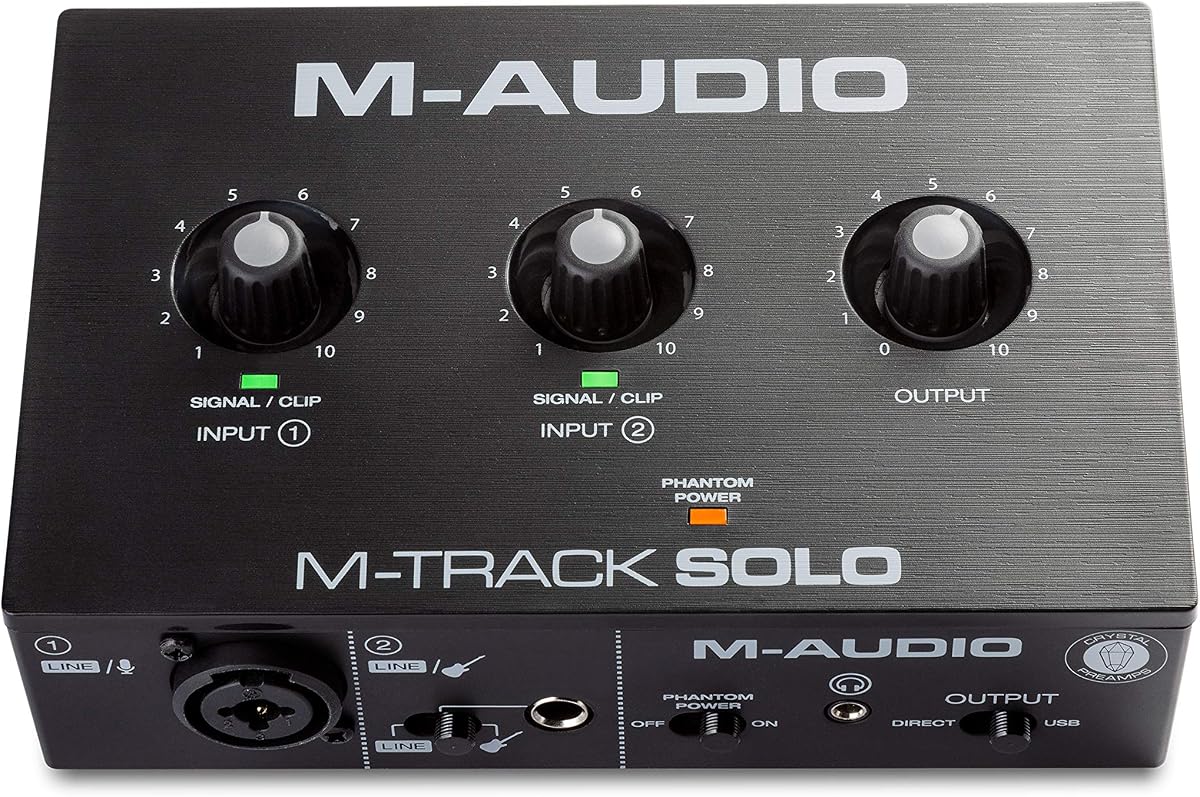
The M-AUDIO M-Track Solo is an entry-level option for guitar recording. It holds a 4.3 rating from users valuing simplicity. One combo XLR/Line input plus Line/Instrument input offers flexibility. Transparent Crystal Preamp ensures optimal mic sound.
We may earn a commission when you buy through this link, at no additional cost to you.
Phantom power supports condenser mics for vocal layers. USB/Direct switch enables zero latency monitoring. Included MPC Beats provides production tools. 1/8" headphone output and RCA outputs offer basic monitoring. It covers podcasting recording and live streaming needs.
Solo input limits tracking multiple instruments simultaneously. RCA outputs may not suit long cable runs. However these are acceptable for its price range. Beginners find the setup straightforward and intuitive for learning.
Choose this for solo artist workflows or podcasting. It balances affordability with functional features. If you need a reliable starter interface for guitar and voice this M-AUDIO model is highly practical.
Crystal Preamp guarantees optimal sound from all microphones including condensers.
Includes MPC Beats complete with essential tools from Akai Professional.
We may earn a commission when you buy through this link, at no additional cost to you.
The Arturia MiniFuse 1 stands out with its 5-year warranty. This 4.6-rated unit supports guitar and voice with combo inputs. Loopback captures app or game audio easily. It includes 5-pin MIDI input and output for synth control.
We may earn a commission when you buy through this link, at no additional cost to you.
A USB A hub supports peripheral connection. Beginner-friendly software includes Ableton Live Lite and Analog Lab Intro. Tutorials and song projects help learning. It handles synths drum machines and controllers seamlessly. Build quality is robust and reliable.
It lacks phantom power which limits condenser mic use. Only one audio input restricts multi-track recording. These trade-offs are acceptable for MIDI integration. The warranty shows confidence in product longevity and durability.
Ideal for creators blending MIDI and audio. It suits those wanting a long-term interface with support. If you need MIDI gear control and tutorials this MiniFuse offers a reliable path forward.
5-year warranty covers manufacturing faults providing peace of mind for users.
MIDI input and output sync with synths controllers and drum machines easily.
We may earn a commission when you buy through this link, at no additional cost to you.
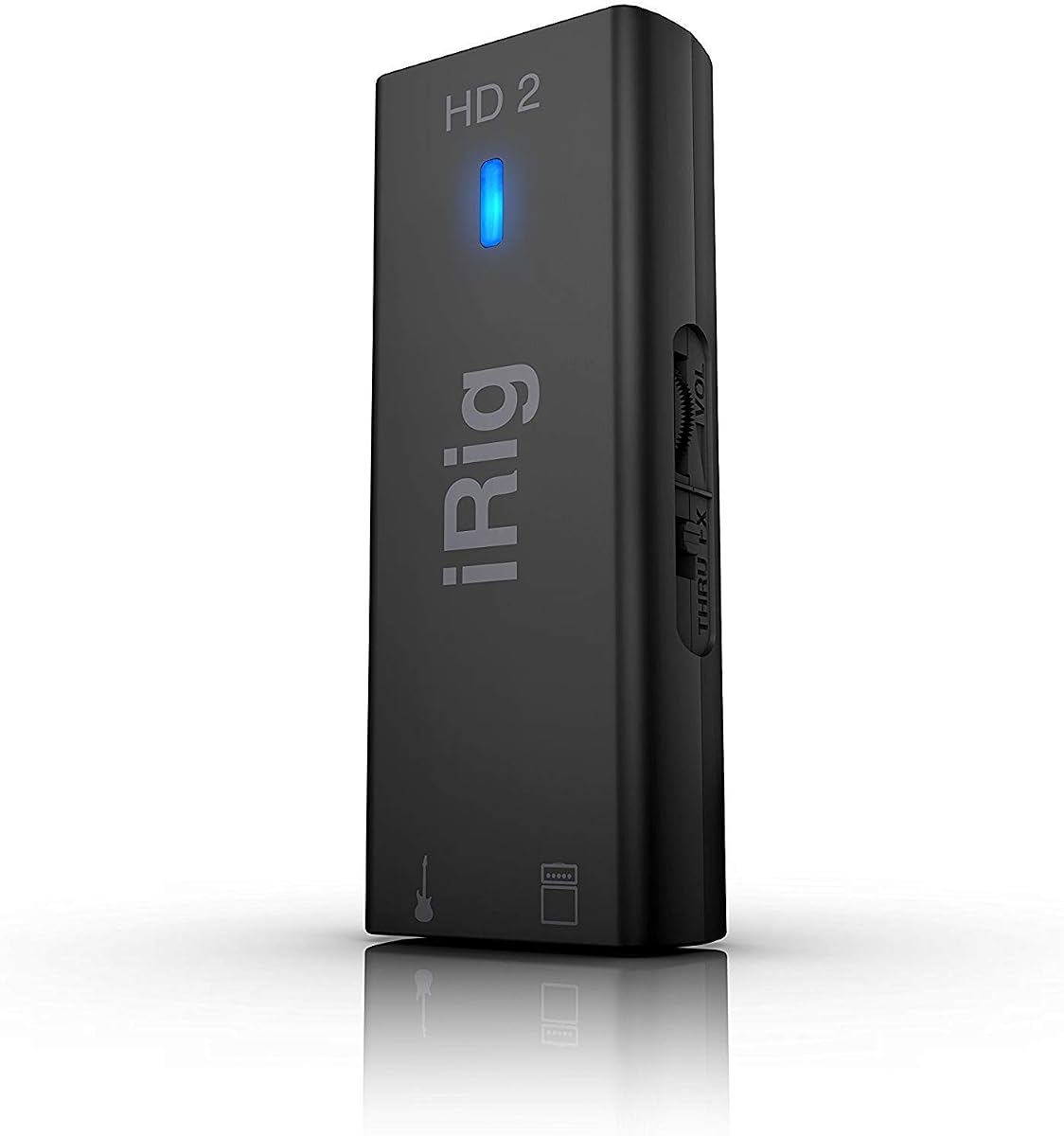
The iRig HD 2 delivers high-definition digital guitar interface. Rated 4.4 it uses 96kHz sampling rate highest in class. It features a Hi-Z input jack for iPhone iPad and PC. Amp Out allows use without additional accessories.
We may earn a commission when you buy through this link, at no additional cost to you.
You can adjust input gain for clear results. FX/Thru switch lets effects pass through. Preamp headphone output allows silent practice. Exclusive amplitude content unlocks for iOS and PC. Lightweight construction fits pockets and bags easily.
Pricing is higher than basic adapters. Setup may require cable changes depending on device. These trade-offs are acceptable for sound quality. It appeals to mobile musicians needing professional results.
Buy this for top-tier mobile recording. It suits those prioritizing fidelity and amp integration. If you need a polished interface for iOS and PC this iRig HD 2 is worth the investment.
96kHz sampling rate ensures performance without sacrifice for silent practice.
Unlock exclusive content inside amplitude iOS and amplitude 4 for Mac/PC.
We may earn a commission when you buy through this link, at no additional cost to you.
The Fender Quantum HD 2 represents premium home studio gear. It offers ultra-high-fidelity 20 x 24 USB-C capabilities. MAX-HD mic preamps provide pristine capture. Auto Gain sets perfect recording levels instantly. This suits demanding musicians and creators.
We may earn a commission when you buy through this link, at no additional cost to you.
32-bit/192 kHz converters ensure professional clarity. ADAT expansion and S/PDIF I/O add sixteen digital inputs. Dual re-amp outputs allow tone exploration. Remote control via Fender Studio app simplifies mixing. It includes perpetual Fender Studio Pro license.
This unit is expensive and complex for beginners. Setup requires understanding digital routing and software. These trade-offs are acceptable for pros needing expandability. It is built for growth in high-end environments.
Choose this if you need maximum input count and features. It suits advanced producers wanting Fender tones and re-amping. If you value expansion and clarity this Quantum HD 2 is the top premium choice.
MAX-HD mic preamps deliver pristine vocal and instrument capture with clarity.
Auto Gain button instantly sets perfect recording levels for fast sessions.
We may earn a commission when you buy through this link, at no additional cost to you.
Selecting the right interface depends on your recording goals and devices. Consider the following factors to match features with your needs.
Sample rate and bit depth determine audio fidelity. Common standards are 24-bit/48kHz for music and 24-bit/192kHz for studio work. Higher rates capture more detail but need more CPU.
Choose at least 24-bit/48kHz for quality.
Input types should match your instruments. Hi-Z or dedicated instrument inputs prevent tone loss. Count depends on whether you record solo or with others. Combo inputs add mic versatility.
Ensure at least one dedicated instrument input.
Connectivity defines device compatibility. USB-C is standard now for speed and power. Thunderbolt suits pros needing low latency. Ensure cables match your computer and phone ports.
Prefer USB-C for modern setups.
Phantom power feeds condenser mics. If you record vocals or acoustic guitar with condenser mics, look for 48V supply. Dynamic mics need it but this feature expands mic choices.
Look for 48V phantom power.
Low latency monitoring is vital for playability. Direct monitoring switches route audio to headphones without software delay. ASIO drivers reduce buffer sizes for tight timing.
Check for direct monitoring switch.
Software bundles save costs on DAWs and plugins. Many include trials or lite versions. Check included tools match your workflow needs like amp sims or mastering.
Review included software for value.
Build quality ensures durability. Metal chassis and sturdy knobs withstand transport. Warranty length signals manufacturer confidence. Look for at least two years of coverage.
Prefer units with metal build.
Expansion options like ADAT or S/PDIF allow adding channels later. Future proofing saves replacing gear. Consider growth plans when buying interfaces with limited I/O.
Check for ADAT if expanding.
Start by connecting your guitar via instrument input. Set gain using input level LED to avoid clipping. Plug headphones into output for zero-latency monitoring.
Install required drivers on your computer if needed. Configure audio settings to select interface as input device. Use DAW software to record tracks with clear signal.
Clean surfaces with dry cloth regularly. Avoid placing near heat sources or liquids. Store cables properly to prevent connection issues over time.
Most modern interfaces are class-compliant and work without drivers on Mac and Windows. Some may require ASIO drivers for low latency. Check product specs to confirm if drivers are needed.
Direct monitoring routes your instrument signal straight to headphones without software processing. This gives zero latency for real-time play. Look for a dedicated switch or knob on the unit.
Yes many interfaces support phones via USB-C or Lightning. Some are designed for mobile recording with zero latency. Ensure your phone supports OTG if using Android devices.
Interfaces often come with USB-C to USB-A cables. Check listings to confirm included cables since third-party may fail. Some include adapters for different ports like Lightning.
Not all support condenser mics as they require 48V phantom power. Check specs for phantom power before buying. Most multi-input models include this feature but single ones may not.
Use balanced cables and keep away from power supplies. Ensure ground loops are managed by using proper grounding. Keep input gains optimized to reduce background hiss.
The top picks include the Focusrite Scarlett Solo, JOYO Guitar Interface, and Fender Quantum HD 2. These models cover budget, general use, and premium needs effectively.
Prioritize sound quality and ease of use over extra features if starting out. Consider expansion needs before buying to avoid future replacements.
Remember prices change so check current listings before purchasing. Verify warranty terms and included software to confirm value fits your project needs.