
BOSGAME E4 Air Mini PC
4.2Editor score
AMD Ryzen 5 3500U
8GB DDR4 Memory
Triple 4K Display Support
Discover the top Linux Mini Pcs for 2026. Our guide compares performance, compatibility, and value across ten trusted models for every user.
Linux Mini Pcs offer a powerful alternative to traditional desktops for developers and enthusiasts who prefer open source operating systems. These compact devices deliver significant computing power while consuming less energy and taking up minimal desk space for efficient workflows.
We evaluated ten leading models based on processor performance, RAM capacity, storage options, and native Linux compatibility. Each product was analyzed for its ability to handle multitasking, virtualization, and daily productivity tasks without compromising on speed or reliability.
Each pick highlights key strengths like expansion slots, display support, and connectivity ports to help you find the right fit. Prices and availability may change frequently, so please verify current details on the product pages before making your final purchase decision.
4.2Editor score

4.8Editor score

4.0Editor score
The following table provides a side-by-side comparison of all ten selected Linux Mini Pcs to help you quickly identify which model meets your specific performance and budget requirements for your next setup.


The TK Node Mini PC stands out as an excellent entry point for Linux users seeking a reliable and well-supported small form factor computer. It comes with Zorin OS Core pre-installed, offering a familiar interface that eases the transition from Windows while leveraging the stability of Ubuntu.
We may earn a commission when you buy through this link, at no additional cost to you.
This model features an AMD Ryzen R2314 processor which provides sufficient power for general office tasks web browsing and lightweight development work. The inclusion of dual SO-DIMM slots and dual NVMe slots ensures that users can expand both memory and storage as their needs grow over time.
While the base configuration includes 8GB of RAM which is adequate for many users power users might find they need to upgrade for heavier multitasking workloads. The system is designed for continuous operation and includes a VESA mount kit for flexible placement in various environments.
If you value a pre-configured Linux experience with strong US-based support and expandability options this mini PC is a compelling choice. It balances performance and flexibility well making it suitable for home offices small business setups and development stations alike.
Zorin OS Core provides a polished desktop environment tailored for Linux newcomers and experienced users alike ensuring immediate usability out of the box.
With dual RAM and storage slots plus a US-based warranty this unit offers long-term value and peace of mind for technical professionals.
We may earn a commission when you buy through this link, at no additional cost to you.
The Beelink SER3 Mini PC delivers reliable performance for everyday computing tasks with its AMD Ryzen 3 3200U processor and 16GB of DDR4 RAM. This configuration is ideal for users who need smooth multitasking capabilities without breaking the bank on higher-end hardware.
We may earn a commission when you buy through this link, at no additional cost to you.
Its integrated Radeon Vega graphics ensure that the system can handle media playback and light graphic design work efficiently. The dual HDMI ports allow for a dual monitor setup which enhances productivity for coding data entry or financial tracking applications.
However the dual-core architecture may limit performance in heavily threaded workloads such as video rendering or complex virtual machines. Additionally the 500GB SSD while fast is not as large as modern standards suggest you may need external storage for large media libraries.
For those prioritizing RAM capacity and multi-monitor support at a reasonable price point this model remains a strong contender. It is a great fit for students home office workers and anyone needing a compact Linux compatible workstation for daily tasks.
The 16GB DDR4 memory ensures smooth operation across multiple applications and browser tabs without frequent system slowdowns or freezing.
Dual HDMI ports combined with modern wireless connectivity make this device versatile for both work and entertainment setups at home or office.
We may earn a commission when you buy through this link, at no additional cost to you.
The ASUS NUC 14 Pro represents the pinnacle of Linux Mini PC performance with its Intel Ultra 7 processor and massive 64GB of DDR5 RAM. This machine is built for professionals and developers who require desktop-level power in a compact form factor for complex workloads.
We may earn a commission when you buy through this link, at no additional cost to you.
With Linux Mint pre-installed users get a clean stable and developer-friendly operating system right out of the box. The advanced cooling system ensures that the CPU maintains high performance during extended sessions without thermal throttling or excessive noise.
The inclusion of Thunderbolt 4 and WiFi 6E provides future-proof connectivity options for high-speed data transfer and reliable wireless networking. While the price is significantly higher than other models the raw power and expandability justify the investment for demanding use cases.
If you need a machine for AI research virtualization or heavy development workflows this model is unmatched in its class. It is the best choice for those who want top-tier performance and premium build quality without compromising on Linux compatibility.
Linux Mint offers a lightweight yet powerful environment ideal for coding virtualization and cloud development tasks without unnecessary bloat.
The dual copper heat pipe design maintains optimal operating temperatures even under sustained high load ensuring consistent performance over time.
We may earn a commission when you buy through this link, at no additional cost to you.
The Beelink Mini S12 Pro excels as a low-power solution for home office and media center applications with its Intel N100 processor. This chip delivers significant performance gains over previous generations while keeping energy consumption and heat generation to a minimum.
We may earn a commission when you buy through this link, at no additional cost to you.
Equipped with 16GB of DDR4 RAM it handles multitasking and daily office tasks with ease. The dual HDMI ports support 4K resolution at 60Hz making it perfect for connected home theater setups or dual monitor productivity stations.
Users should note that memory is soldered limiting future upgrades to storage expansion only. However for most basic computing needs this configuration provides excellent value and smooth performance without the need for constant maintenance or fan noise.
For users seeking an efficient silent and capable mini PC that runs Linux well this model is a top recommendation. It is particularly well suited for digital signage home servers and casual computing tasks where power efficiency is a priority.
The N100 processor provides a balance of speed and low power consumption ideal for 24/7 operation as a home server or NAS.
Integrated WiFi 6 and Bluetooth 5.2 ensure fast wireless data transfer and stable connections for peripherals without needing extra adapters.
We may earn a commission when you buy through this link, at no additional cost to you.
The KAMRUI Pinova P2 Mini is designed for users who need extensive screen real estate with its ability to drive three 4K displays simultaneously. This makes it an ideal candidate for stock traders financial analysts or multitasking professionals who require multiple windows open at once.
We may earn a commission when you buy through this link, at no additional cost to you.
Powered by the AMD Ryzen 7 3300U it offers a solid balance of speed and efficiency for general productivity tasks. The LPDDR4X memory ensures quick data access and smooth operation even when switching between many applications and browser tabs.
The main limitation lies in the base storage capacity which is 256GB and memory which is soldered to the motherboard. However the inclusion of an extra M.2 slot allows for significant storage expansion to accommodate large files and media libraries.
If you require a compact device that supports a triple monitor setup without sacrificing performance this model is a standout choice. It provides a clean aesthetic and efficient cooling that keeps noise levels low during daily operations.
Support for three independent 4K screens enables unparalleled workflow efficiency for coding trading and detailed document management tasks.
The small footprint and quiet cooling system make this device unobtrusive on any desk while maintaining optimal thermal performance under load.
We may earn a commission when you buy through this link, at no additional cost to you.
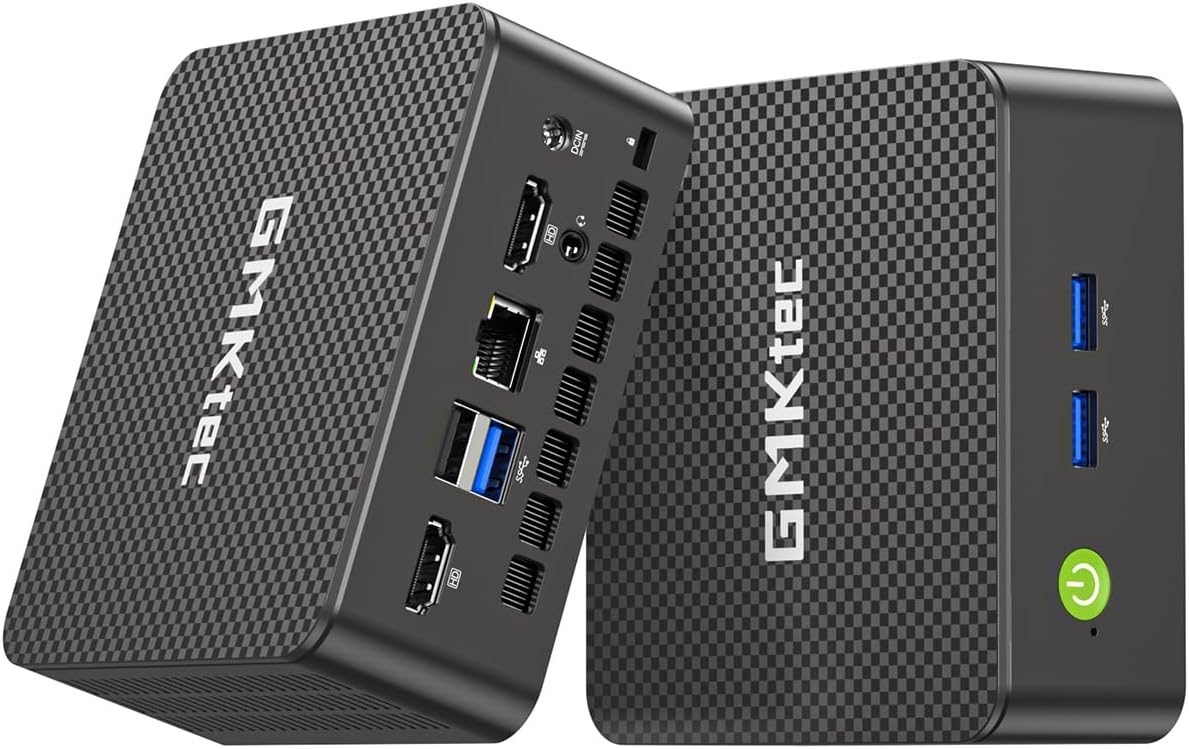
The GMKtec G11 Mini PC is a specialized device tailored for networking and server applications featuring dual 2.5GbE Ethernet ports. This hardware configuration makes it an excellent choice for running software firewalls NAS systems or home lab virtualization environments.
We may earn a commission when you buy through this link, at no additional cost to you.
With the AMD R2514 embedded processor and dual channel RAM it delivers reliable throughput for data transfer and handling multiple network connections. The integrated Radeon GPU ensures that it can still drive three 4K displays for monitoring and management tasks.
While it may not be the first choice for general desktop computing its robust networking features set it apart in the mini PC market. Users interested in advanced home networking setups will find the dual NIC capability particularly valuable for isolating traffic or creating VLANs.
For enthusiasts and IT professionals looking for a compact and powerful networking appliance this model offers exceptional value and performance. It is a robust tool for securing home networks and managing complex storage solutions effectively.
Dual 2.5GbE ports allow for high-speed network segmentation and firewall configurations essential for secure and efficient home labs.
Strong GPU performance supports multiple high resolution displays for comprehensive system monitoring without needing external graphics cards.
We may earn a commission when you buy through this link, at no additional cost to you.
The CyberGeek Mini PC Gaming is built for power users who need desktop-class performance in a small footprint. With an 11th Gen Core i9-11900H processor and 32GB of RAM it handles demanding workloads including gaming emulation and software development with ease.
We may earn a commission when you buy through this link, at no additional cost to you.
Running Ubuntu Linux out of the box it provides a stable and open environment for developers and professionals. The system supports triple 4K displays allowing for immersive multi-monitor setups that can be utilized for coding or content creation.
Despite its impressive performance the high power draw can lead to increased heat and fan noise during intensive tasks. Users should be aware of this trade-off when planning its placement in quiet environments such as home studios or offices.
For those who prioritize raw power and connectivity options this mini PC is a formidable choice. It bridges the gap between traditional towers and portable units offering high performance for those willing to accommodate its energy needs.
The 8-core 16-thread i9 processor ensures rapid processing of complex tasks and smooth multitasking across heavy applications.
Multiple USB ports and dual LAN interfaces provide versatile options for connecting peripherals and managing network traffic efficiently.
We may earn a commission when you buy through this link, at no additional cost to you.
The BOSGAME E5 Mini PC is a versatile option for home lab enthusiasts and network administrators looking for dual high-speed network ports. Its dual 2.5GbE LAN allows for efficient network segmentation and high throughput which is essential for running virtual machines and routers.
We may earn a commission when you buy through this link, at no additional cost to you.
Featuring an AMD Ryzen 3 5300U and 16GB of DDR4 RAM it provides reliable performance for daily computing and server tasks. The system supports dual NVMe storage expansion which is crucial for storing large datasets and multiple OS images without slowdown.
While it uses older WiFi 5 technology the wired network capabilities more than make up for it in server applications. The quiet cooling design ensures that it can run unobtrusively in living rooms or offices without generating excessive noise.
For users building home servers or requiring robust networking in a small device this model offers significant advantages. It balances performance expandability and quiet operation effectively for technical users.
Dual 2.5GbE ports enable advanced networking setups like pfSense routers or NAS servers with high speed and reliability.
Dual NVMe slots allow for rapid expansion of storage capacity without needing external drives or enclosures for data management.
We may earn a commission when you buy through this link, at no additional cost to you.
The BOSGAME E4 Air Mini PC offers an affordable entry into the world of Linux Mini Pcs making it accessible for students and budget-conscious users. Its AMD Ryzen 5 3500U processor provides sufficient power for basic tasks and media consumption at a very competitive price.
We may earn a commission when you buy through this link, at no additional cost to you.
Despite the lower cost it supports triple 4K displays which is rare for this price range. This feature allows users to maximize screen real estate for productivity or home theater setups without investing in expensive hardware.
Limitations include the 8GB of RAM which may restrict heavy multitasking and the use of a SATA SSD which is slower than NVMe alternatives. However for general web browsing document editing and streaming these compromises are often acceptable.
If you need a compact and inexpensive computer for essential daily tasks this model is a practical solution. It provides a solid foundation for Linux usage without the financial commitment required by higher-end models.
A competitive price point makes this mini PC an accessible option for casual users and students seeking a compact Linux system.
Support for three 4K monitors allows for expanded workspace even on a limited budget enhancing productivity for general office tasks.
We may earn a commission when you buy through this link, at no additional cost to you.
The GMKtec G3S Mini PC is designed for basic office and entertainment tasks with its Intel N95 processor. It delivers a smooth experience for web browsing and streaming while maintaining very low power consumption which reduces electricity costs over time.
We may earn a commission when you buy through this link, at no additional cost to you.
With 8GB of RAM and a 256GB M.2 SSD it provides a balanced configuration for essential productivity and storage needs. The dual HDMI outputs allow for a dual monitor setup which is helpful for comparing documents or spreadsheets during work hours.
While not intended for heavy computational tasks it is highly efficient for steady state operations. The compact design and quiet operation make it a suitable addition to home desks where space and noise levels are concerns.
For users seeking a no-frills reliable machine for everyday tasks this model is a practical choice. It offers good value and modern connectivity options at a price point that is hard to beat for basic users.
The N95 processor delivers reliable performance for daily tasks with minimal power draw making it ideal for always-on setups.
Dual HDMI outputs enable efficient multitasking across two screens without the need for additional hardware or adapters.
We may earn a commission when you buy through this link, at no additional cost to you.
Selecting the right Linux Mini PC involves understanding your specific needs regarding performance compatibility and expandability.
The CPU is the brain of your mini PC and determines how well it handles multitasking and intensive tasks. For general office use models with quad-core processors like the Intel N100 or AMD Ryzen 3 are sufficient. However for development or virtualization consider models with more cores such as the Intel i9 or AMD Ryzen 7.
Always check the thread count as well since higher thread counts allow for smoother parallel processing which is beneficial for compiling code or running multiple services simultaneously.
Memory is crucial for running Linux distributions and applications simultaneously without lag. Aim for at least 16GB of RAM if you plan on running virtual machines or heavy browsers. Some models allow upgrades while others have soldered memory so check if the RAM is expandable before purchasing.
If you need to run Docker containers or multiple IDEs ensure the system has enough capacity to avoid constant swapping to the slower storage drive which can cause performance issues.
Storage speed and capacity impact how quickly your system boots and loads files. NVMe SSDs are preferred over SATA SSDs due to faster read and write speeds. Check if the mini PC has extra M.2 slots to add more storage later as your data grows.
Many Linux users require significant space for repositories and logs so having the ability to expand storage without replacing the drive is a valuable feature for long-term use.
While most modern mini PCs work well with Linux some components like WiFi or audio may need specific drivers. Models that come with Linux pre-installed ensure that hardware is tested for compatibility. Otherwise check forums to see if your chosen model has a good Linux reputation.
Ensuring that your device supports standard Linux distributions like Ubuntu or Mint will save you from spending hours troubleshooting hardware issues after you purchase it.
Adequate USB and video ports are essential for connecting peripherals and monitors. Look for models with USB 3.2 or Type-C ports for faster data transfer. HDMI and DisplayPort support allows for multiple monitor setups which increases productivity significantly.
Wireless options like WiFi 6 and Bluetooth 5.0 or newer ensure reliable connections for modern peripherals and network speeds without needing cables cluttering your desk.
Mini PCs often have compact cooling systems which can generate heat and noise under load. Review thermal tests to ensure the fan is silent enough for office use or home environments. Active cooling is necessary for performance but should not be disruptive.
Better thermal designs with copper heat pipes and dedicated fans will keep the CPU cool during extended use preventing throttling and maintaining consistent speeds.
Durability is key for long-term use so consider the chassis material and build reputation of the brand. A solid warranty and accessible technical support can save you from unexpected costs if the device fails. US-based support is often a plus for faster resolution.
High-quality materials like aluminum can dissipate heat better than plastic and add to the durability of the device ensuring it withstands daily use and accidental bumps.
Determine your budget based on your specific needs to avoid overspending on features you may not use. Entry-level models offer good value for basic tasks while premium ones justify their cost with high-end performance. Always compare specs per dollar to find the best deal.
Investing in a slightly higher spec model can provide better longevity and reduce the need for upgrades in the near future making it a smart financial choice over time.
To get started with your new Linux Mini PC plug in the power adapter and connect your monitor and keyboard using the available HDMI and USB ports. If the device does not come with a pre-installed OS download the appropriate Linux ISO file and create a bootable USB drive to install your chosen distribution.
Regularly update your system packages to ensure you have the latest security patches and features. Use the package manager of your distribution such as apt for Ubuntu or dnf for Fedora to manage updates efficiently. Keeping your system current helps maintain stability and performance.
Clean the exterior and vents of the mini PC regularly to prevent dust buildup which can cause overheating. Use compressed air to blow out dust from the fan and vents every few months. Ensure the device is placed in a well-ventilated area to maintain proper airflow around the chassis.
Some models like the ASUS NUC 14 Pro and CyberGeek Mini PC come with Linux Mint or Ubuntu pre-installed. Others may ship with no OS or Windows so check the product details carefully before buying.
Most models offer some level of expandability. However some budget options have soldered memory. Always check the specific product specs for available RAM slots and additional storage bays before purchasing.
Yes especially the high-end models with Intel Core i9 or AMD Ryzen 7 processors and ample RAM. They handle virtual machines well for testing or development purposes provided cooling is adequate.
Most modern Linux distributions like Ubuntu Fedora and Mint work well. Check the model's WiFi and audio drivers to ensure they are supported by your chosen distribution before installation.
Many models support dual or triple 4K displays through HDMI and DisplayPort. This makes them suitable for multi-screen productivity setups common in coding and financial work.
Integrated graphics allow for light gaming and emulation. For heavy AAA gaming these mini PCs are not ideal but they work well for strategy and retro titles on a budget.
We have explored ten diverse Mini Pcs ranging from budget-friendly options to high-performance systems. The TK Node and ASUS NUC 14 Pro stand out for their balance of support and power respectively making them top contenders for different user needs.
Prioritize RAM and processor cores if you plan on heavy multitasking or development work. For general home use efficiency and noise levels are often more important than raw speed so consider low-power chips like the N100 for daily tasks.
Always verify current pricing and availability as these values can change frequently. Checking user reviews and warranty terms will ensure you make a confident decision that meets your specific computing requirements for years to come.