
QIDI Max4 Combo
4.5Editor score
390mm build area
65C heated chamber
Closed-loop motors
Discover the top Fdm Printer for Large Prints models of October 2026. This guide compares build volume, speed, and features to help you choose the right large
Finding the right Fdm Printer for Large Prints can transform your creative projects and professional workflows. Whether you need to prototype large parts or create detailed models, choosing the correct machine ensures success.
We have carefully evaluated the leading models available today. Our analysis focuses on build volume, print speed, material compatibility, and ease of use to help you find the perfect fit for your needs.
Each pick highlights key strengths and ideal use cases to guide your decision. Please note that availability and specific configurations may change over time, so verify details before purchasing your next machine.
4.5Editor score

4.0Editor score

4.1Editor score
This table provides a side-by-side overview of the top ten large format printers. Compare key specifications like build volume, maximum speed, and special features to determine which model best suits your printing requirements.



The Bambu Lab P1S is a powerful Fdm Printer for Large Prints that balances speed and quality. It offers an enclosed design and supports multi-color printing when connected to the AMS system.
We may earn a commission when you buy through this link, at no additional cost to you.
It prints at speeds up to 500mm/s with high acceleration. This makes it great for finishing projects quickly. The auto bed leveling and user-friendly design reduce the time needed to start printing.
While the machine handles many filaments well, carbon or glass fiber reinforced polymers are not recommended. Also, full multi-color functionality requires the optional AMS accessory.
This model is ideal for creators who want reliable results fast. Its speed and features make it a top choice for anyone serious about efficient 3D printing.
Printing at 500mm/s allows you to complete projects in a fraction of the time compared to standard printers.
Supports PLA, PETG, TPU, and ASA. The enclosed design helps maintain stable temperatures for engineering materials.
We may earn a commission when you buy through this link, at no additional cost to you.
The Snapmaker U1 is designed for advanced makers needing multi-material capabilities. Its unique four-toolhead system allows for seamless switching between different materials during a single print job.
We may earn a commission when you buy through this link, at no additional cost to you.
With a tool change time of just five seconds, it reduces downtime significantly. The CoreXY system ensures stability at high speeds. This precision is crucial for detailed prototypes and functional parts.
The system minimizes filament waste by swapping toolheads instead of purging. However, its build volume is smaller than other large format models. It may not be suitable for very oversized single-piece prints.
Choose this printer if you prioritize multi-material projects. Its advanced features support complex workflows and professional-grade results.
The SnapSwap system ensures reliable tool changes with zero failures validated through over a million swaps.
Compatible with rigid and flexible materials as well as water-soluble supports for complex geometries.
We may earn a commission when you buy through this link, at no additional cost to you.
The Creality Ender 5 Max offers a 400mm cube build volume at an accessible price point. It is designed for larger models or batch production tasks that require significant space.
We may earn a commission when you buy through this link, at no additional cost to you.
Its CoreXY system delivers speeds up to 700mm/s. The all-metal frame and linear rail system provide the rigidity needed for stable tall prints. Automated leveling ensures reliable first layers.
While it lacks some premium automation features, the multi-printer control helps manage farms. Some users may need to tweak settings for optimal performance. This is a standard trade-off for the price.
This model is perfect for small businesses and workshops needing large capacity. It combines size with reliability for consistent production output.
The rapid-heating bed and robust extruder are built to handle continuous printing schedules without failure.
WLAN control allows you to manage multiple units from one location for efficient workflow management.
We may earn a commission when you buy through this link, at no additional cost to you.
The K2 Plus Combo is a flagship machine offering 350mm build volume with advanced automation. It includes the CFS system for up to sixteen color options without manual intervention.
We may earn a commission when you buy through this link, at no additional cost to you.
It uses step-servo motors for high acceleration and speed. The Matrix frame eliminates resonance, ensuring precision even at top speeds. Dual AI cameras monitor prints for failures and flow optimization.
Users can print high-temp materials like PPA thanks to the active heated chamber. However, the machine is expensive and requires careful initial setup. These factors are manageable for experienced users.
This printer is ideal for professional environments needing color and size. It delivers high-end performance with minimal user intervention for complex jobs.
Eighteen sensors monitor every aspect of the print, automatically adjusting settings for optimal quality and reducing errors.
The system handles high-melting-point engineering filaments with ease, expanding what you can create.
We may earn a commission when you buy through this link, at no additional cost to you.
The ANYCUBIC Kobra X offers an affordable way to enter multi-color printing. It supports native four colors and can expand to nineteen with additional ACE units for vibrant projects.
We may earn a commission when you buy through this link, at no additional cost to you.
Its design minimizes filament waste by reducing purge length. The LeviQ 3.0 leveling system ensures precise bed calibration. A built-in camera helps monitor prints remotely via the app.
While the build volume is smaller than true large format options, it fits well on workbenches. Users seeking massive sizes might prefer other models. But for color efficiency, this is a strong contender.
This model suits makers focused on color variety and efficiency. It brings multi-color printing to a wider audience with reliable performance.
The top-mount architecture reduces footprint, allowing you to fit more printers in your workshop space.
Remote management and AI detection prevent damage and save material during long or complex prints.
We may earn a commission when you buy through this link, at no additional cost to you.
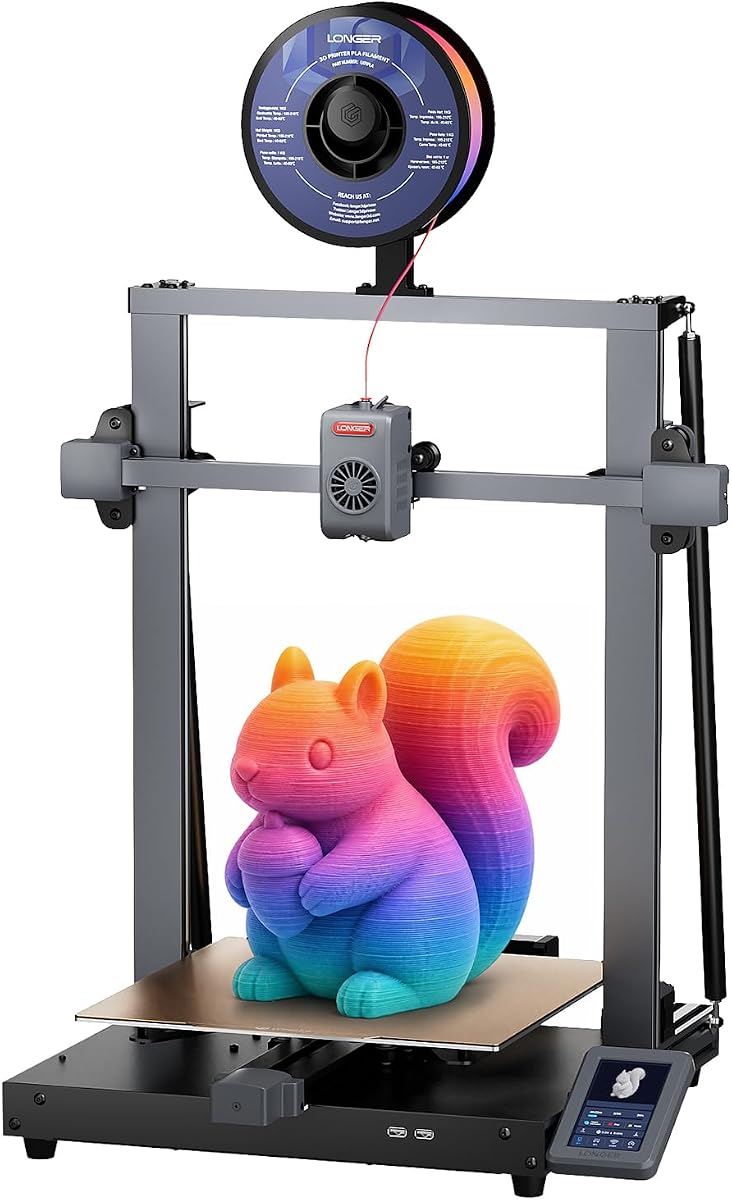
The LONGER New LK10 Plus features a tall build volume ideal for statues or large components. It runs Klipper firmware which enables high-speed printing up to 500mm/s.
We may earn a commission when you buy through this link, at no additional cost to you.
Upgraded direct drive extrusion handles various materials smoothly. The auto bed leveling and smart Z offset make setup easier for beginners. Dual-band WiFi supports stable remote control.
While it offers great specs for the price, it lacks some advanced automation. Users may need to adjust settings for best results. This is common for open-source focused models.
Choose this for tall prints without high costs. It provides reliable performance and flexibility for various projects.
Powered by Klipper firmware, the printer moves quickly while maintaining stability and accuracy for better results.
Dual-band WiFi ensures your remote prints stay connected without dropouts or delays in monitoring.
We may earn a commission when you buy through this link, at no additional cost to you.
The QIDI Max4 Combo offers a massive 390mm x 340mm build area. It includes a 65C heated chamber essential for printing warpr-prone engineering materials like ABS and PC.
We may earn a commission when you buy through this link, at no additional cost to you.
Closed-loop motors ensure precision at speeds up to 800mm/s. The hardened steel nozzle handles abrasive filaments without wear. AI camera monitoring helps prevent issues during long prints.
It is a premium machine with a higher cost. The Polar Cooler is sold separately for some cooling needs. These requirements are minor for professional users seeking quality.
This printer is designed for industrial applications. It delivers reliability and high-quality results for functional parts.
The heated chamber maintains consistent temperatures to ensure strong layer adhesion and prevent warping on large parts.
Closed-loop motors and a hardened nozzle provide the stability and durability needed for demanding production tasks.
We may earn a commission when you buy through this link, at no additional cost to you.
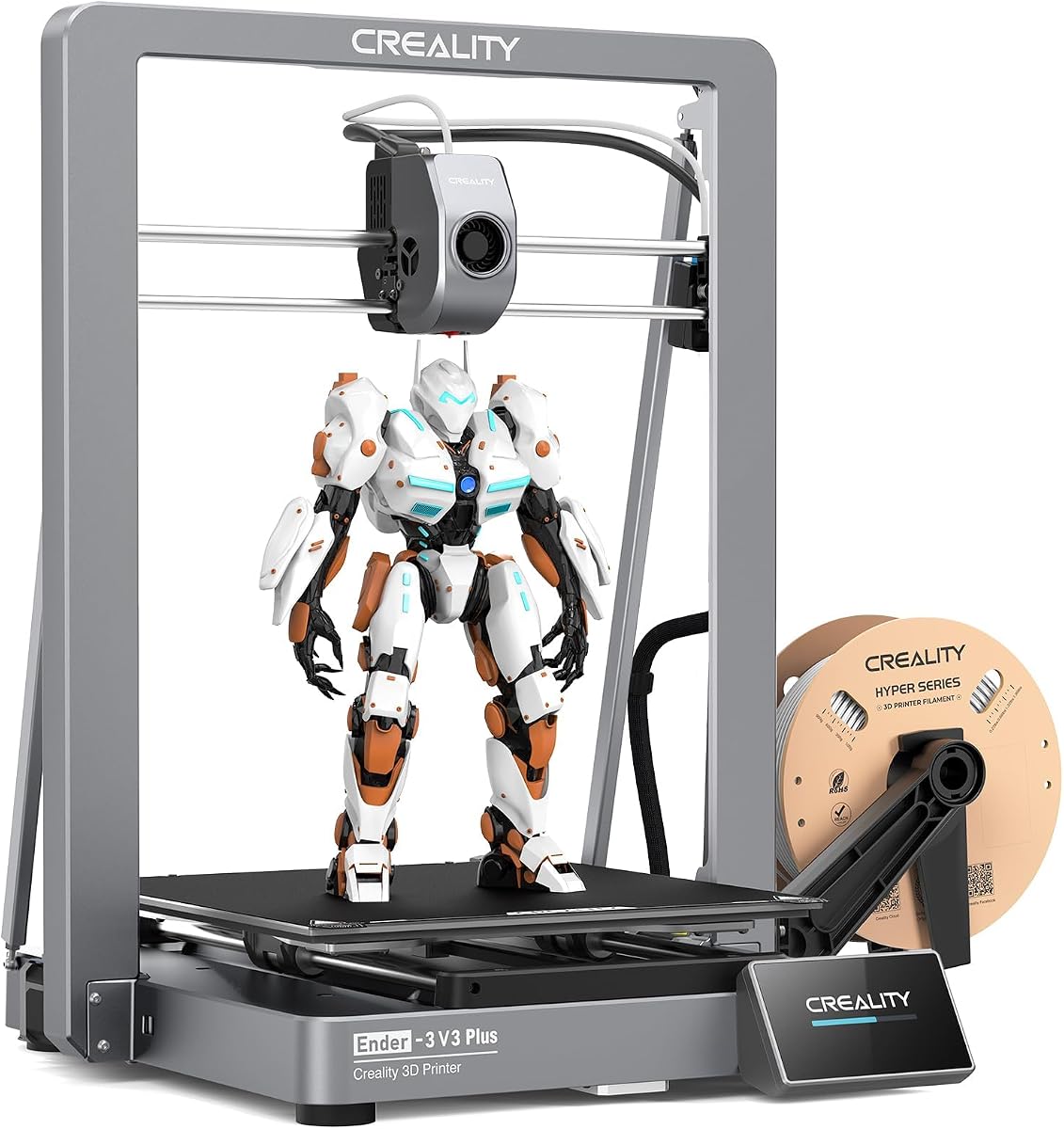
The Ender 3 V3 Plus introduces a CoreXZ system for faster movement. It supports speeds up to 600mm/s. The build volume allows for life-size items in one piece.
We may earn a commission when you buy through this link, at no additional cost to you.
Pre-assembled modules and auto calibration make setup quick. The tri-metal nozzle offers durability for daily use. Dual Y-axis motors reduce shaking for better print quality.
However, users report inconsistencies in first-layer quality. Some calibration adjustments may be needed initially. These issues vary by unit and setup environment.
It is suitable for general use where speed matters. Consider testing carefully upon arrival to ensure your expectations are met.
The belt tension design minimizes maintenance while delivering smooth motion for faster print times.
Dual Y-axis motors provide extra stability for large prints, reducing wobbling at high speeds.
We may earn a commission when you buy through this link, at no additional cost to you.
The LONGER LK5 Pro 3 is 90% pre-assembled for easy setup. Its large touch screen makes navigation simple. The open-source board allows for future customization.
We may earn a commission when you buy through this link, at no additional cost to you.
With a tall build size, it handles large vertical projects. Resume printing protects against power outages. Silent drivers keep the environment quiet during operation.
It lacks auto-leveling which requires manual bed setup. While manageable, this adds steps for new users. The trade-off is lower cost and flexibility.
Choose this for learning or occasional large prints. It balances simplicity with enough capacity for creative hobbies.
The 4.3-inch color screen offers clear views of print status and controls for easy management.
Resume printing ensures you do not lose progress during unexpected power interruptions or failures.
We may earn a commission when you buy through this link, at no additional cost to you.
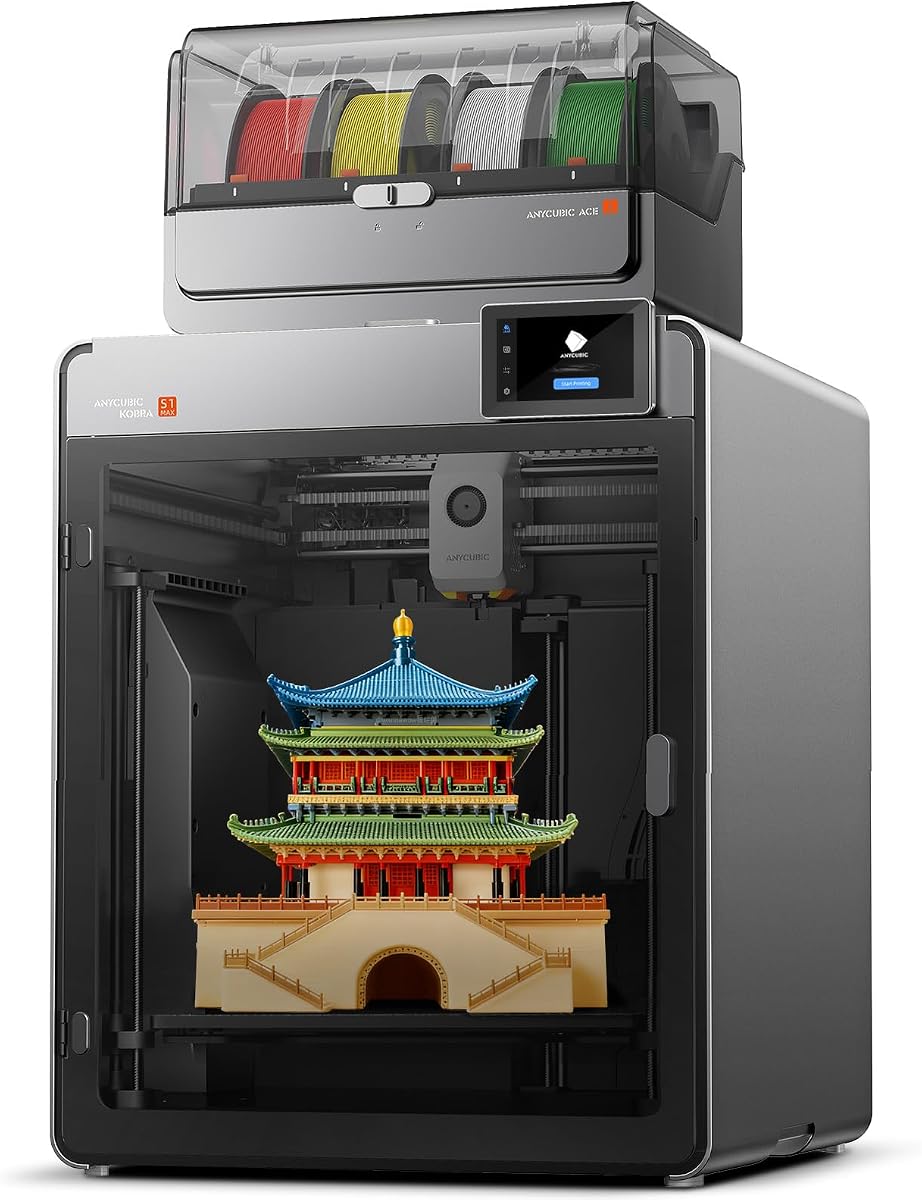
The Anycubic Kobra S1 Max features an enclosed CoreXY system for stability. It supports a 350mm cube build volume which accommodates most large designs.
We may earn a commission when you buy through this link, at no additional cost to you.
ACE 2 Pro units enable up to sixteen colors for vibrant projects. The 65C chamber helps prevent warping. LeviQ 3.0 auto-leveling ensures consistent first layers.
While ratings are limited, its hardware specs are competitive. It supports many materials from flexible TPU to engineering ABS. This versatility makes it useful for diverse workflows.
This printer is great for quality and size. It brings professional features to a large format machine.
Active vibration compensation reduces ringing during high-speed prints for cleaner and more precise results.
You can connect multiple ACE units to scale up color options for complex and artistic models.
We may earn a commission when you buy through this link, at no additional cost to you.
Choosing the right Fdm Printer for Large Prints requires understanding your specific needs and constraints. This guide breaks down the critical factors to consider.
The build volume determines the maximum size of objects you can print without splitting them. For large prints, look for dimensions exceeding 300mm on all axes to handle most engineering or creative tasks.
Ensure the machine offers enough space for your projects to avoid tedious post-processing.
High-speed printing reduces wait times significantly. Models with CoreXY or similar motion systems often achieve speeds over 500mm/s while maintaining quality.
Prioritize printers with high acceleration and stable motion to balance speed with accuracy.
Different projects require different materials. Engineering parts often need ABS or ASA which require heated chambers to prevent warping. Check if the printer includes active heating features.
A printer that supports a wide range of filaments offers more flexibility for future needs.
Active heated chambers maintain consistent temperatures inside the print area. This is crucial for large prints using materials like ABS to ensure strong layer adhesion.
Look for models with active temperature control to reduce print failures on complex shapes.
Multi-color systems allow for vibrant prints without manual filament changes. Some printers use tool changers or input systems to switch colors seamlessly.
Consider if you need this feature for aesthetic projects or if standard printing suffices.
Automation features like auto bed leveling and camera monitoring simplify the printing process. They help ensure success and allow for remote supervision of long jobs.
These tools save time and reduce frustration during setup and operation.
User-friendly software makes slicing and controlling the printer easier. Open-source firmware options allow for customizations but require more technical knowledge.
Choose a system that matches your comfort level with technical adjustments.
A strong user community provides troubleshooting help and shared settings. Brands with active forums and support channels make issues easier to resolve.
This is especially important for large printers where adjustments might be frequent.
Start by leveling the build plate carefully to ensure proper first-layer adhesion. Use the auto-leveling features if available to simplify this process.
Keep the machine clean and free of dust to prevent mechanical issues. Regularly lubricate rails and check belts for tension to maintain print quality.
Store filaments properly in dry environments to avoid moisture absorption which causes print defects. This extends the life of your materials.
A large format FDM printer typically has a build volume exceeding 300mm on at least one axis. These machines are designed to handle oversized prototypes or single-piece prints that standard desktop printers cannot accommodate.
Yes, a heated chamber helps maintain consistent temperatures during long print jobs. This reduces the risk of warping, especially when using materials like ABS or ASA which shrink as they cool.
CoreXY systems offer high speeds and stability by moving the print head on two independent belts. This reduces vibration during high-speed movement which is essential for maintaining precision on large surfaces.
Some printers support modular color systems like input units or tool changers. Check if the model allows expansion so you can upgrade your capabilities as your needs grow over time.
Regular maintenance includes checking belt tension, lubricating rails, and cleaning the nozzle. Large machines move heavier parts so ensuring mechanical integrity prevents print failures and extends hardware life.
Auto leveling is highly recommended as it compensates for bed imperfections across the large area. It ensures consistent first layers and reduces the manual effort required for setup and calibration.
The Creality Ender 5 Max and QIDI Max4 Combo stand out for their size and advanced features. The Snapmaker U1 offers unique multi-tool flexibility for specialized professional tasks.
Prioritize build volume and material needs when deciding. If you need speed, look for CoreXY models. If you need color, consider systems with expandable input options.
Always check current availability and specific features before purchasing. Technology evolves quickly so the best model today may be updated by the time you are ready to buy.