
AA AUDIO ACCESSORY AP16 XLR Patchbay
4.6Editor score
Modular blocks require no cutting
24K gold-plated XLR pins
Full-steel chassis for durability
A quality patchbay for studio setups ensures clean signal routing and minimizes cable clutter. Professional models offer durable construction and reliable connectivity for various audio interfaces.
We compared ten top-rated patchbays based on build quality, connector type, and flexibility. Each product was evaluated for its suitability in professional recording and live sound environments.
Each pick highlights unique features like modular designs or reversible connectors. Note that prices fluctuate frequently so verify current availability before purchasing your preferred model.
4.6Editor score

4.8Editor score

4.5Editor score
As an Amazon Associate we earn from qualifying purchases.
The following table presents a side-by-side comparison of all ten patchbays evaluated in this guide. Use it to quickly identify key specifications like channel count and connector types for your specific studio needs.



The AA AUDIO ACCESSORY AP16 is a robust patchbay for studio use with a unique modular design. It holds a strong rating for its ability to eliminate PCB cutting risks during setup.
We may earn a commission when you buy through this link, at no additional cost to you.
Its four independent blocks allow flexible configurations for 4 to 16 channels. The 24K gold-plated pins ensure stable signal transmission without corrosion over time.
While it lacks higher channel counts, the build quality is excellent for small to mid-sized studios. The reversible ears support various rack depths for easy installation.
Choose this model if you want a durable and flexible routing solution. It is ideal for engineers needing organized cabling without permanent modifications.
Assign each block to different system zones for cleaner cabling and easier maintenance without replacing the entire unit.
The full-steel chassis suppresses resonance and the support team responds within 24 hours for technical setup issues.
We may earn a commission when you buy through this link, at no additional cost to you.
The ART P16 XLR Balanced Patchbay is a trusted choice for budget-conscious studios needing reliable connectivity. It receives high praise for its rugged construction and straightforward design.
We may earn a commission when you buy through this link, at no additional cost to you.
With 16 connectors on each side it handles standard routing efficiently. The fully shielded enclosure protects signals from interference in noisy environments.
It does not offer advanced switching modes like normalled options. This makes it better for simple direct routing than complex signal processing chains.
Buy this if you need a dependable backbone for your studio connections. Its three-year warranty offers peace of mind for long-term use.
The black all-steel enclosure is fully shielded to maintain signal integrity during critical recording sessions.
Rear rack ears allow flexible 1U mounting in standard 19-inch racks for quick setup.
We may earn a commission when you buy through this link, at no additional cost to you.
The Samson S-Patch Plus offers extensive connectivity for studios using TRS cables. Its high rating reflects its smooth operation and balanced signal path.
We may earn a commission when you buy through this link, at no additional cost to you.
It features 48 points on front and rear sides for versatile patching. Toggle switches allow per-channel configuration of normalled or thru modes easily.
While it does not support XLR directly its TRS design suits synthesizers and gear. The toggle switches add flexibility for complex signal routing.
Select this for studios with many 1/4 inch devices. It is perfect for reducing back-panel clutter and improving workflow speed.
Miniature toggle switches let you configure every channel for normalled half-normalled or thru operation independently.
Eliminates reaching behind racks by providing a central hub for all audio connections.
We may earn a commission when you buy through this link, at no additional cost to you.
The Behringer ULTRAPATCH PRO PX3000 delivers high flexibility with its multi-mode switching capabilities. It is rated well for bringing order to busy studio racks.
We may earn a commission when you buy through this link, at no additional cost to you.
Each channel can be switched to parallel half-normalled or open functions. This allows ultimate control over signal routing without extra hardware.
While the options are powerful they can be complex for beginners. However the rugged construction ensures longevity in active production environments.
Ideal for users needing advanced routing flexibility. It helps manage complex signal flows in larger studio setups efficiently.
Switch channels to parallel half-normalled or open to match diverse audio workflows and signal paths.
This professional patchbay eliminates cable clutter adding order and clarity to your audio connections.
We may earn a commission when you buy through this link, at no additional cost to you.
The Black Lion Audio PBR XLR Patchbay is designed for high-fidelity signal routing in professional environments. It is known for its quality connectors and audio focus.
We may earn a commission when you buy through this link, at no additional cost to you.
With 32 gold-plated XLR connectors it ensures minimal signal loss and corrosion resistance. This is crucial for maintaining pristine audio quality.
It offers fewer channels than larger models but focuses on quality. The compact design fits standard racks without consuming much space.
Choose this for critical signal paths requiring reliability. It suits studios prioritizing connection integrity over channel count.
32 gold-plated XLR connectors provide a clean path for professional audio signals without degradation.
A 16-point patchbay that fits standard racks while maintaining high-quality connections.
We may earn a commission when you buy through this link, at no additional cost to you.
The Black Lion Audio PBR TRS Patchbay offers high-density connectivity for TRS-based studios. It is rated for providing a clean workflow for many devices.
We may earn a commission when you buy through this link, at no additional cost to you.
It features 48 points with 96 gold-plated connectors for balanced audio. This supports high-density setups with synthesizers and audio interfaces.
While it lacks switches it provides a stable routing hub. The gold plating ensures longevity and minimal signal loss over time.
Use this for dense studio setups needing balanced TRS connections. It helps organize signals efficiently without extra complexity.
96 gold-plated TRS connectors resist corrosion and maintain high-quality signal transmission.
Provides a clean and organized routing point for balanced audio sources in the studio.
We may earn a commission when you buy through this link, at no additional cost to you.
The DIYTECH 16 Port XLR Patchbay simplifies routing with its versatile reversible connector design. It is rated for its rugged metal build and clean signal path.
We may earn a commission when you buy through this link, at no additional cost to you.
Its fully reversible ports accommodate various configurations without rewiring. This makes it easy to swap panels or adjust setups quickly.
Heavy-duty steel construction ensures it withstands drops and touring wear. Balanced 3-pin wiring minimizes interference for critical audio work.
Select this for versatile studio or live sound setups. The included mounting screws save time during installation and setup.
Fully reversible male/female ports allow versatile configurations without rewiring or panel swaps.
Heavy-duty steel chassis resists drops and scratching for long life in pro environments.
We may earn a commission when you buy through this link, at no additional cost to you.
The Black Lion Audio PBR TT LIT is a high-density patchbay for large-scale audio studios. It holds strong ratings for its gold-plated construction and display features.
We may earn a commission when you buy through this link, at no additional cost to you.
With 96 TT connectors and customizable LED displays it offers clear visual tracking of signal paths. It also includes 12 DB-25 ports for high-channel interfaces.
This is a premium solution requiring significant investment. It is best for professionals needing clear visual identification and maximum connectivity.
Choose this for top-tier studio integration. It simplifies managing large numbers of audio connections with clear visual feedback.
Customizable LED displays supported by macOS and Windows help track signals easily in large setups.
96 TT connectors and 12 DB-25 ports offer unparalleled density for complex audio infrastructure.
We may earn a commission when you buy through this link, at no additional cost to you.
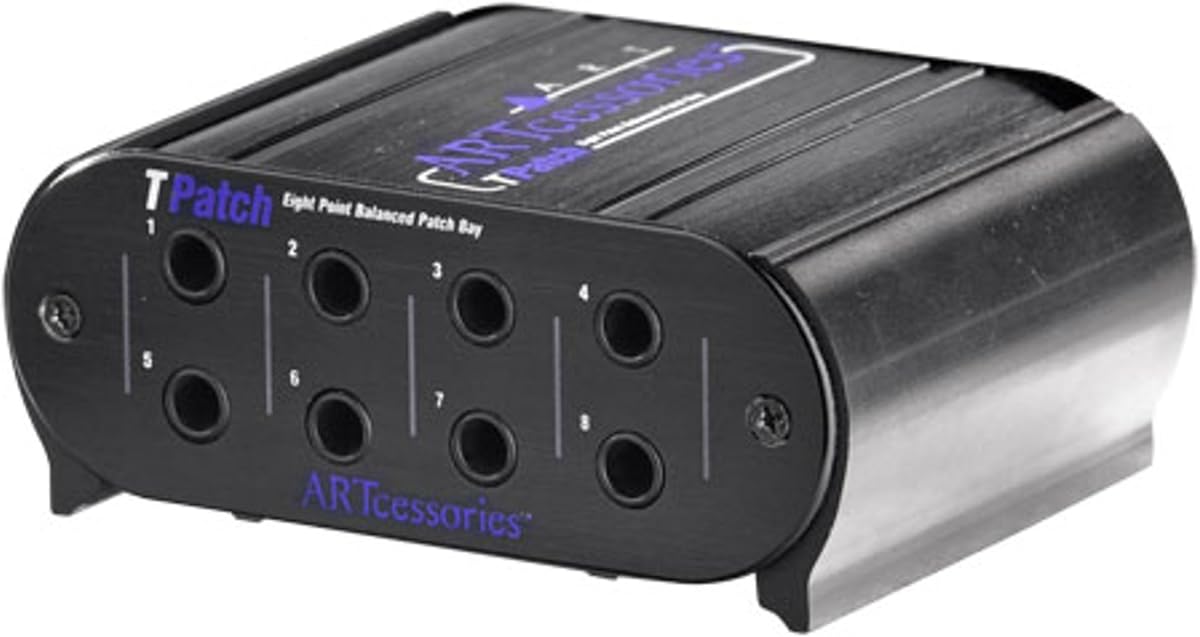
The Art Pro Audio TPatch is a compact balanced patch bay ideal for smaller studio setups. It is rated highly for its solid build and balanced direct signals.
We may earn a commission when you buy through this link, at no additional cost to you.
It features four channels of linked input/output pairs with switchable half normal modes. This flexibility allows tailored signal routing without external hardware.
While it only has eight points it offers high quality connections. The rugged extruded aluminum case ensures durability and protection.
Use this for compact studio setups needing balanced routing. It is perfect for desktop racks where space is limited.
Four channels of linked input/output pairs simplify common signal flows in small studios.
Switchable half normal and normal modes allow flexible through type connections for routing.
We may earn a commission when you buy through this link, at no additional cost to you.
The Hosa PDR-369 offers a simple 12-point XLR balanced patchbay for entry-level routing. It is rated for its reversible connectors and compact design.
We may earn a commission when you buy through this link, at no additional cost to you.
It supports reversible mounting and balanced audio connections. This makes it a versatile and affordable option for organizing small audio racks.
While it has fewer ports than others it is sufficient for basic needs. The straightforward design ensures reliable operation without extra complexity.
Buy this for entry-level studios needing quick organization. It provides a reliable central hub for balanced XLR signals.
Reversible 12-point connectors offer flexibility for different mounting orientations and panel swaps.
Designed for balanced XLR signals to minimize interference in critical audio work.
We may earn a commission when you buy through this link, at no additional cost to you.
Selecting the right patchbay depends on your studio size and signal types. Consider these factors to ensure optimal performance and longevity.
Choose between XLR TRS or TT connectors based on your gear inputs. XLR suits balanced microphones while TRS fits instruments and interfaces.
Verify compatibility with existing cables to avoid extra adapters and maintain signal integrity.
Assess the total number of points needed for all devices. A 16-point bay suits small setups whereas 48+ supports larger productions.
Consider future expansion to ensure the unit meets long-term growth needs.
Look for toggle switches if you need flexible signal paths. Options like normalled half-normalled or thru offer greater control over routing.
Basic models without switches may suffice for direct connections but limit flexibility.
Prioritize heavy-duty steel chassis and gold-plated connectors for durability. Metal construction resists damage during frequent maintenance or transport.
Robust build quality ensures long-term reliability in demanding studio environments.
Ensure the patchbay supports standard 19-inch rack mounting. Reversible ears allow flexibility for front or rear installation.
Check depth requirements to avoid conflicts with other equipment in the rack.
Fully shielded enclosures prevent electromagnetic interference and noise. This is critical for maintaining audio quality in complex signal chains.
Choose models with adequate shielding to preserve signal integrity.
Opt for modular or reversible designs to simplify repairs and cleaning. Features like detachable blocks reduce long-term maintenance costs.
Easy maintenance ensures the patchbay remains functional for years.
Check the warranty period to protect your investment. Longer warranties indicate manufacturer confidence and reduce risk of costly failures.
Select reputable brands that offer solid support and clear warranty terms.
Start by labeling front and rear jacks clearly to prevent confusion. Use durable tags to identify signal sources and destinations.
Use high-quality balanced cables to connect inputs and outputs properly. Check connections periodically to ensure tight contact.
Avoid bending cables excessively near the jacks to prevent wire fatigue. Store excess cable neatly to maintain a clean and organized setup.
A studio patchbay provides a centralized point to route audio signals between equipment. It simplifies connections between microphones interfaces and processors without needing to constantly rearrange cables.
Choose based on your devices XLR is best for balanced microphones and audio gear while TRS suits synthesizers and stereo inputs. Match the connectors to your equipment for optimal performance.
Yes a 16-point patchbay is usually sufficient for home setups. It covers typical needs like microphone inputs monitors and basic processing gear.
Normalled means the rear input is internally connected to the front output by default. This allows devices to work without a patch cord unless you intentionally route a different signal.
A patchbay adds convenience by letting you switch gear easily. While interfaces handle connections a patchbay keeps cables organized and speeds up signal routing changes.
Clean contacts with electronic cleaner every six months to remove dust. Regular maintenance prevents connection issues and ensures reliable signal flow over time.
These top picks offer reliable solutions for various studio sizes and budgets. Models like the AA ACCESSORY AP16 and ART P16 provide great value for routing.
Focus on connector type and durability when making your decision. Ensure the patchbay supports your gear inputs and provides clean signal paths.
Always check current pricing and availability before purchasing. Prices change often so confirm details on the product page for the most accurate info.