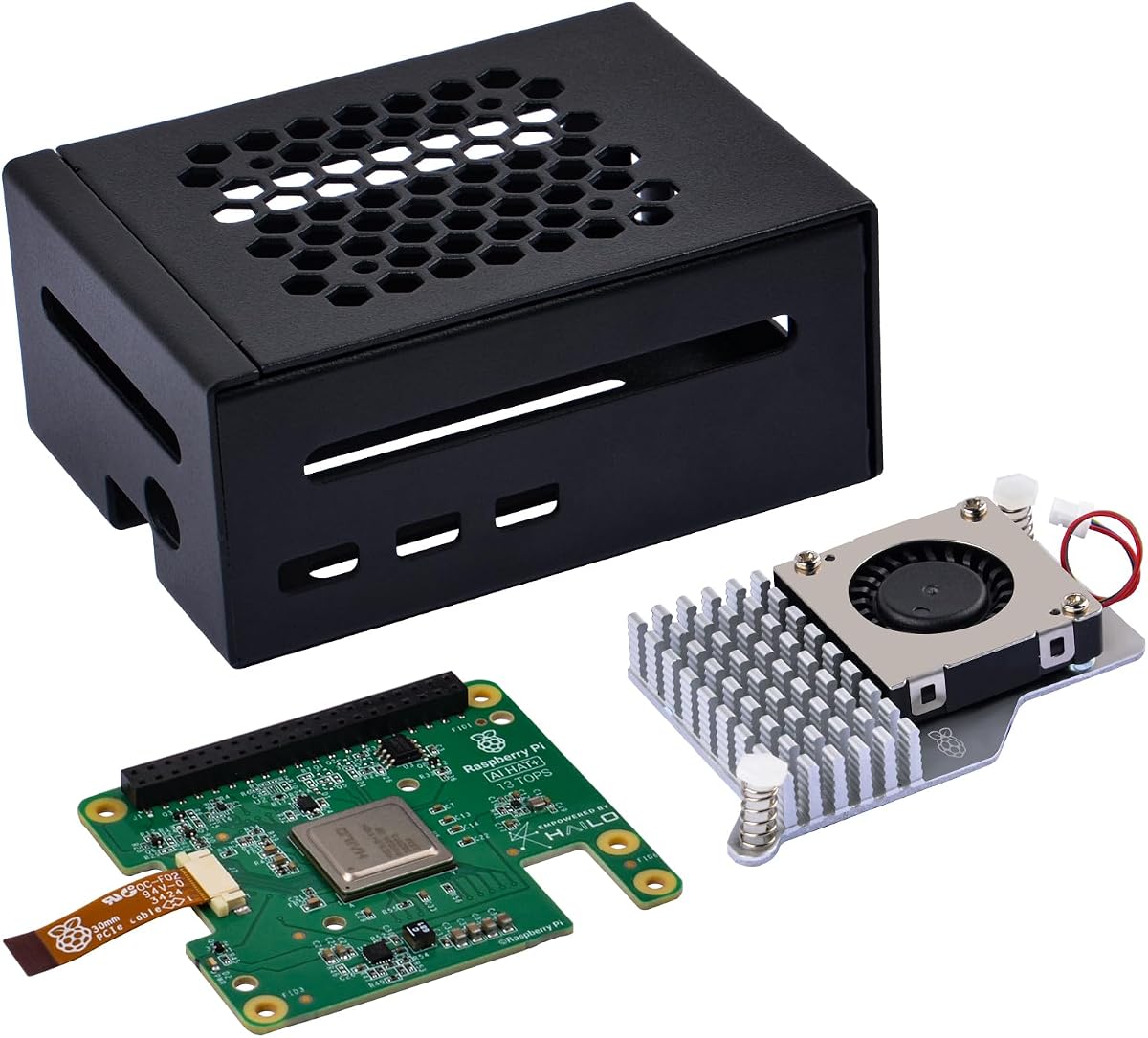
GeeekPi AI HAT+ Build-in Hailo AI Accelerator with Metal Case & Active Cooler for Raspberry Pi 5 (13 Tops)
4.5Editor score
13 TOPS Hailo NPU
Metal case protection
Active cooler included
Discover the top AI Raspberry Pi kits for 2026. Our expert guide compares hardware, sensors, and learning resources to help you choose the perfect smart home
Artificial intelligence has transformed single-board computing, making powerful AI capabilities accessible to hobbyists and developers. These kits integrate cameras, sensors, and accelerators to enable vision, voice, and decision-making projects. Whether you are learning Python or building smart home systems, the right kit provides the hardware and guidance needed to succeed.
We evaluated the top AI Raspberry Pi kits based on performance, component quality, educational resources, and ease of use. Our analysis includes models with dedicated NPUs, multi-sensor arrays, and comprehensive learning materials. Each product was selected for its ability to support real-world AI applications ranging from object detection to voice interaction.
Each pick highlights unique strengths like onboard AI accelerators, touch displays, or extensive sensor suites. While specifications vary, all options deliver reliable performance for development and prototyping. Please note that component availability and pricing may fluctuate, so verify current details before purchasing your preferred AI development kit.
4.5Editor score

4.6Editor score

5.0Editor score
This side-by-side comparison details the hardware, sensors, and AI capabilities of each kit. Use this table to quickly identify which model matches your project needs, budget, and preferred programming environment.
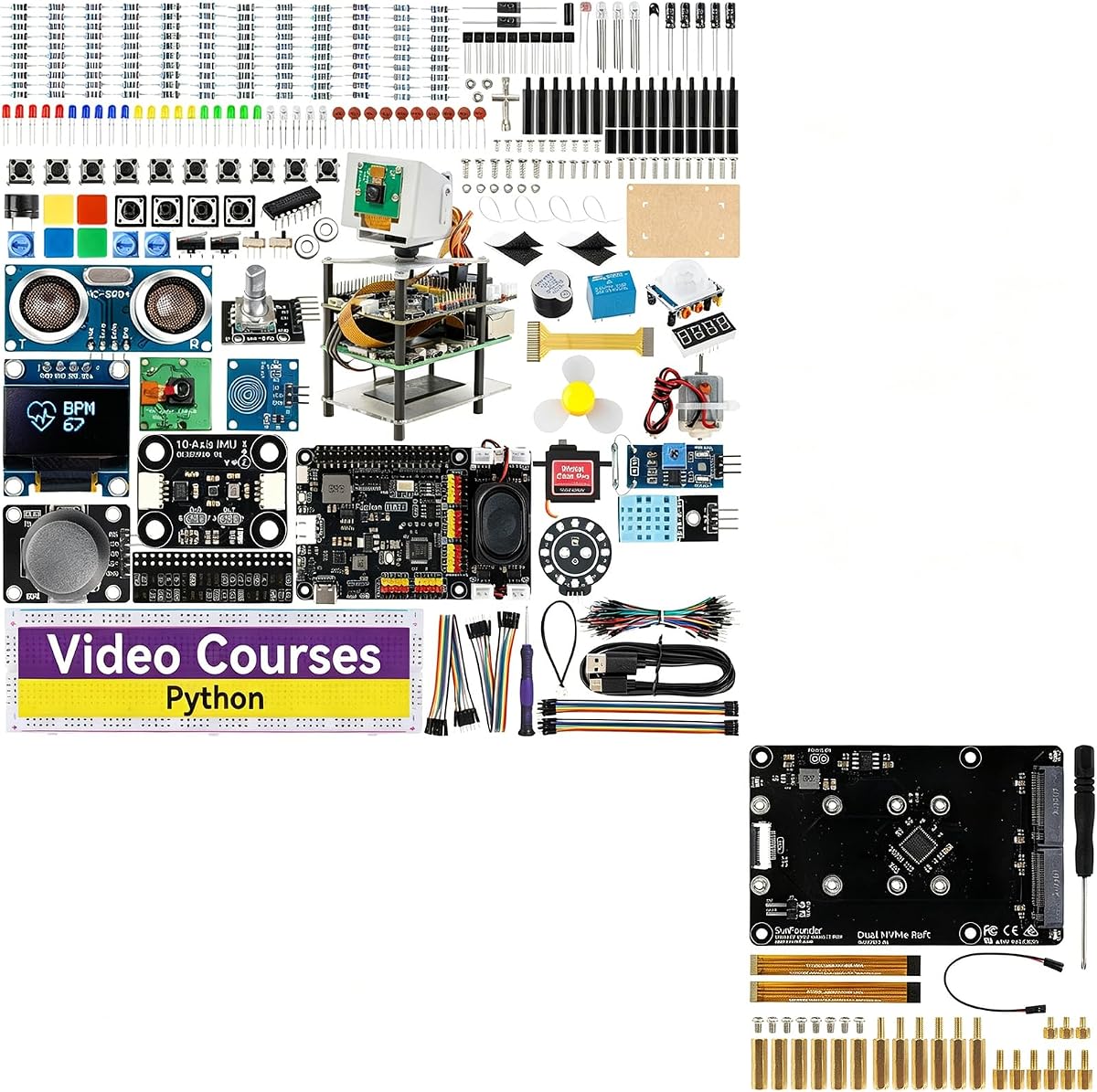


The SunFounder AI Fusion Lab Kit stands out as the top pick for developers seeking a complete AI learning environment. It supports multiple large language models and includes hardware like a Pan-Tilt HAT and 10-axis sensor. With guided video lessons from Paul McWhorter, it bridges the gap between theory and practical application effectively.
We may earn a commission when you buy through this link, at no additional cost to you.
This kit enables multi-modal projects combining voice, vision, and sensor data. The Fusion HAT+ power system simplifies hardware control while the Python library unifies interactions. Users can build projects that recognize objects, respond to voice commands, or track movement using OpenCV and MediaPipe seamlessly.
While the Raspberry Pi board is not included, the kit provides high-quality components that integrate smoothly. The only minor drawback is potential setup variance depending on your Pi model. However, detailed documentation and responsive support mitigate these issues for beginners and experienced makers alike.
Ideal for students, hobbyists, and engineers, this kit offers a structured path from basics to advanced AI. It encourages creativity through hands-on projects and provides the tools needed to prototype smart systems. For those prioritizing education and versatility, it remains the best overall choice.
Combine sensors, voice recognition, and camera vision to create interactive AI projects that can see, hear, and respond in real time.
Learn through structured video lessons created with educator Paul McWhorter to ensure clear understanding of complex AI concepts.
We may earn a commission when you buy through this link, at no additional cost to you.
The Vilros Raspberry Pi 5 AI Kit delivers maximum performance for demanding AI workloads. Featuring the Hailo-8 accelerator with up to 26 TOPS, it handles complex tasks like object detection and segmentation efficiently. The kit includes every essential component, ensuring you can start building immediately without additional purchases.
We may earn a commission when you buy through this link, at no additional cost to you.
Its full hardware ecosystem includes a 128GB SD card preloaded with the OS, active cooling, and a compatible case. The Pi 5's 3x CPU boost paired with the NPU provides smooth computing for automation or development. This integration makes it ideal for serious projects requiring reliable, high-speed processing.
The main trade-off is the higher price point and exclusivity to the Pi 5. However, the performance gains and completeness justify the investment for professionals or enthusiasts. Users report excellent stability and ease of setup, making it a top-rated option for advanced AI tasks.
For those needing top-tier speed and a ready-to-go setup, this kit is unmatched. It supports real-time AI performance and simplifies deployment. If budget allows and you seek professional-grade capabilities, this represents the premium choice for AI development.
The 26 TOPS Hailo-8 accelerator enables real-time processing of complex neural networks for professional-grade applications.
Every component from power supply to case is included, saving time and ensuring compatibility across all hardware.
We may earn a commission when you buy through this link, at no additional cost to you.
The GeeekPi AI HAT+ Kit offers an accessible entry point for AI acceleration on the Raspberry Pi 5. Its built-in Hailo neural network accelerator provides 13 TOPS of power, capable of running object detection and pose estimation efficiently. Combined with a metal case and active cooler, it ensures reliable performance during intensive tasks.
We may earn a commission when you buy through this link, at no additional cost to you.
Integration with Raspberry Pi OS is seamless, with automatic detection of the NPU for supported applications. The PCIe Gen 3 interface ensures fast communication, while the cooling system maintains optimal temperatures. This hardware combo allows users to deploy AI projects without complex configuration or overheating issues.
Although the Raspberry Pi board is sold separately, the kit's components are high-quality and well-matched. The primary limitation is its exclusive support for the Pi 5. However, for those already owning a Pi 5 or planning to upgrade, this provides a cost-effective upgrade path for AI.
Best for makers on a budget who need real-world AI capabilities, this kit balances performance and price. It supports a wide range of applications from smart cameras to industrial sensors. For cost-conscious developers seeking acceleration, it stands out as a top value option.
The active cooler and metal case work together to prevent overheating, ensuring stable performance during long runs.
Raspberry Pi OS automatically recognizes the accelerator, making AI computing tasks ready without complex drivers.
We may earn a commission when you buy through this link, at no additional cost to you.
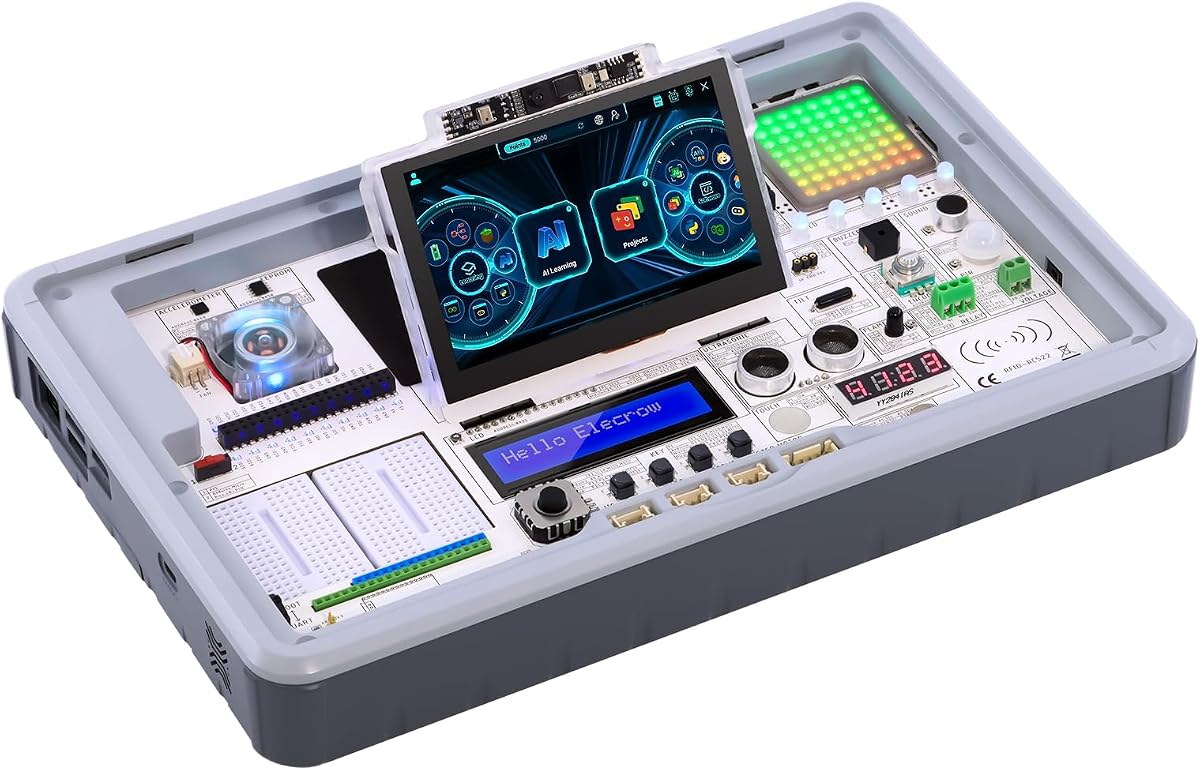
The ELECROW CrowPi3 Basic Kit provides a comprehensive learning station with a 4.3-inch capacitive touch display. It includes 41 different sensors and modules, eliminating the need for complex wiring. With 200 step-by-step lessons, it guides users through identifying components, reading code, and running programs on the terminal.
We may earn a commission when you buy through this link, at no additional cost to you.
Designed for education, the kit supports OpenCV and facial recognition projects directly. The tidy layout of sensors makes it easy to start coding immediately. It is compatible with multiple boards including Pi 5, Arduino Nano, and micro:bit, offering flexibility across different learning paths.
The main consideration is that the Pi 5 is not included, and this is the basic version. While it covers essential AI and electronics tasks, advanced users may want more capacity. However, for students and educators, its structured curriculum and hardware simplicity are significant advantages.
For schools or self-learners focusing on curriculum-driven projects, this kit excels. It simplifies the hardware side so learners can focus on logic and code. If you want a ready-to-use station with guided lessons, it is a strong choice for structured education.
41 onboard sensors let you experiment with light, temperature, motion, and more without extra purchases.
200 lessons take you from basics to advanced coding, ensuring steady progress through AI and electronics.
We may earn a commission when you buy through this link, at no additional cost to you.
This kit combines the SunFounder Fusion Lab with a Dual NVMe Raft for powerful storage and AI capabilities. The raft supports two M.2 SSDs with PCIe Gen 2.0, enabling RAID 0/1 setups or a single SSD with an AI accelerator. It transforms the Pi 5 into a server-grade system for NAS or AI developers.
We may earn a commission when you buy through this link, at no additional cost to you.
Ideal for home labs, it supports OpenMediaVault and provides reliable, fast storage. The included AI learning kit adds value for prototyping projects alongside server duties. Users can build Home Assistant, media centers, or AI nodes with robust hardware integration.
Setup is straightforward, and the Raft provides significant performance over SD storage. The requirement for a Pi 5 is the main constraint. However, for makers needing both storage and AI tools in one package, this combination delivers high flexibility.
For those building home servers or needing fast data access for models, this is a top pick. It handles heavy workloads and keeps your system organized. If storage and AI projects are your focus, this kit meets complex needs efficiently.
PCIe Gen 2.0 speeds up to 500MB/s deliver fast data access for demanding server or AI workloads.
Use the same kit for NAS and AI prototyping, reducing hardware needs and simplifying development workflows.
We may earn a commission when you buy through this link, at no additional cost to you.
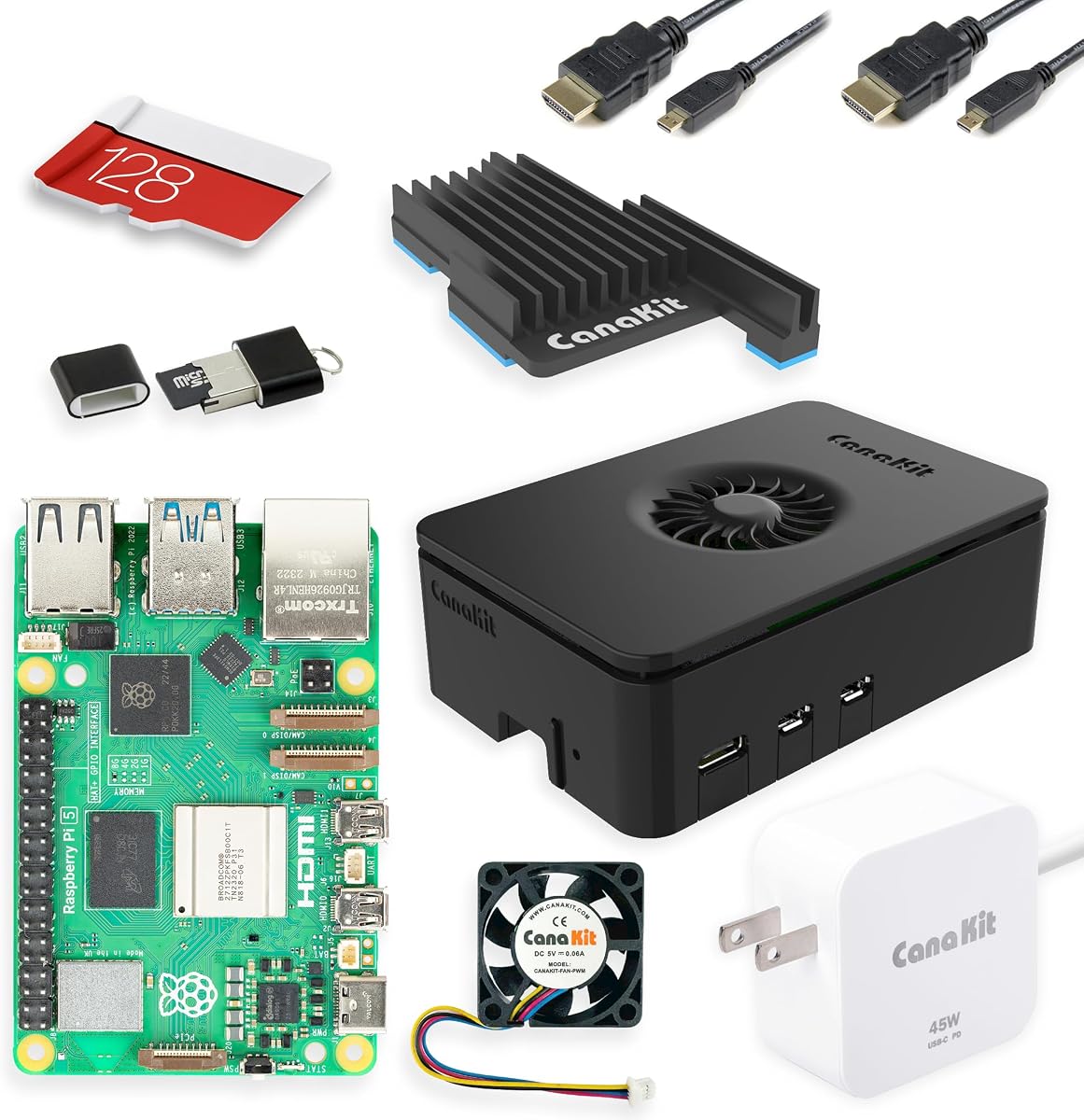
The CanaKit Pi 5 Starter Kit PRO offers a reliable foundation for all development tasks. It includes an 8GB RAM Pi 5, 128GB SD card preloaded with the OS, and a 45W power supply. The Turbine Black case features a low-noise fan, ensuring quiet operation while keeping the system cool.
We may earn a commission when you buy through this link, at no additional cost to you.
While not specifically an AI kit with NPU, it supports AI projects through software and USB accelerators. Its high build quality and brand reputation make it a safe choice for first-time buyers. Everything needed for a full workstation is included, minimizing setup hassle.
The absence of dedicated AI accelerators means you may need add-ons for heavy inference tasks. However, its performance is robust for general computing and learning. For those prioritizing stability and ease of use, this is a proven starter option.
If you need a dependable base to start coding or prototyping, this kit is ideal. It avoids compatibility issues and provides ample resources for projects. For beginners wanting a smooth start, it remains a top recommendation for reliability.
A 45W PD supply and low-noise fan ensure stable operation without overheating during long sessions.
8GB RAM and 128GB storage provide headroom for multitasking and large development files.
We may earn a commission when you buy through this link, at no additional cost to you.
For edge AI, the GeeekPi AI HAT+ Kit offers efficient processing with minimal power. The Hailo accelerator supports semantic segmentation and object detection while the active cooler maintains low noise. Its metal case protects hardware, and the system automatically integrates with camera apps for quick deployment.
We may earn a commission when you buy through this link, at no additional cost to you.
Projects involving industrial sensors or cameras benefit from its reliability and compact footprint. The NPU offloads tasks from the main CPU, freeing resources for other functions. It is a practical solution for those deploying models in real-world environments.
The need to buy the Pi 5 separately adds to the cost. However, the focused hardware for AI and cooling makes it efficient. Users report smooth performance in edge scenarios where power and space are limited.
If you need to deploy AI models at the edge without complex setups, this kit excels. It is tailored for applications where reliability and low overhead are critical. For edge deployment professionals, it provides a streamlined, effective platform.
The NPU handles inference with low power, ideal for devices running on limited energy budgets.
A metal case shields components while allowing access to all ports for flexible mounting.
We may earn a commission when you buy through this link, at no additional cost to you.
Seeed Studio's Pi 5 Starter Kit PRO delivers an official component set for reliable professional use. The active cooling case maintains performance under load, while the 27W USB-C power supply ensures stable power for peripherals. A 128GB card preloaded with the OS allows immediate use for Docker or workstation tasks.
We may earn a commission when you buy through this link, at no additional cost to you.
Built for developers, it supports edge AI and media server projects efficiently. The setup is streamlined, removing guesswork for configuration. Backed by Seeed's warranty and support, it offers peace of mind for critical projects.
Like other Pi 5 kits, it does not include an NPU for hardware acceleration. However, its stability and official hardware make it a strong base for software-defined AI. It is ideal for those prioritizing system reliability.
For developers running containerized apps or needing a robust workstation, this kit fits well. It minimizes downtime and ensures consistent performance. If official hardware and support are priorities, this remains a professional-grade choice.
Using official cases and power supplies ensures maximum compatibility and system stability.
Preloaded OS and clear documentation reduce setup time for immediate development starts.
We may earn a commission when you buy through this link, at no additional cost to you.
This kit blends robotics with AI through ChatGPT-4o integration, enabling voice and video interactions. The Pi Zero 2 W powers 12 servos for realistic movements like walking or tail wagging. With FPV app control, users can manage the robot remotely and view its camera feed in real time.
We may earn a commission when you buy through this link, at no additional cost to you.
The rich sensor suite including gyroscope and touch sensors adds interactivity. It is perfect for learning robotics alongside AI. Comprehensive tutorials and support help users complete projects easily, making it engaging for both education and fun.
The Pi Zero 2 W limits heavy AI workloads, but it is sufficient for the kit's tasks. It focuses on robotics applications rather than high-performance computing. For those wanting a tangible AI robot, it is an accessible option.
Ideal for students or hobbyists interested in robotics, this kit offers hands-on fun. It teaches programming and AI concepts through physical interaction. If you want to build a smart robot, this is a top recommendation.
ChatGPT-4o enables natural conversations and gesture recognition for a responsive, intelligent robot.
Use your phone app to drive the robot and view its camera feed in real time.
We may earn a commission when you buy through this link, at no additional cost to you.
The ELECROW CrowPi 3 is designed as an all-in-one learning station for STEM and AI. Its 4.3-inch touch display and 41 sensors offer a clear layout for projects. With 200+ resources covering AI, Python, and Node-RED, it supports learners from beginners to advanced.
We may earn a commission when you buy through this link, at no additional cost to you.
It is multi-board compatible, allowing experimentation with Arduino or Pico. The kit removes wiring complexity so users focus on logic. Educators appreciate the structured lessons and hands-on approach for teaching electronics and programming.
Since the Pi is not included, you must purchase it separately. However, the station itself provides rich learning potential. It is optimized for education, making it ideal for classrooms or self-study.
For educators or self-learners seeking a structured AI education, this kit is excellent. It simplifies learning and encourages creativity. If your goal is educational growth, this station is a highly supportive tool.
Over 200 structured lessons cover AI, IoT, and coding to support a full learning journey.
The capacitive touchscreen enables intuitive interactions and visual project feedback.
We may earn a commission when you buy through this link, at no additional cost to you.
Selecting the right kit depends on your goals, budget, and technical comfort. This guide breaks down key factors to help you make an informed decision.
Focus on the board model and memory. A Pi 5 with 8GB RAM is recommended for AI projects to handle multitasking and model loading. Check if the kit includes an NPU or supports external accelerators for faster inference.
Prioritize kits with sufficient RAM and processor power to avoid bottlenecks in your projects.
Dedicated NPUs like Hailo or Coral accelerate AI tasks significantly. If you plan to run real-time vision models, ensure the kit supports these accelerators. They reduce CPU load and improve efficiency.
An accelerator is critical for performance-heavy applications like object detection.
Look for integrated cameras, microphones, and motion sensors. A good kit offers pre-wired modules to save time on assembly. Verify compatibility with OpenCV and MediaPipe for vision tasks.
Rich sensor arrays enable versatile projects without extra hardware purchases.
Quality kits include tutorials, code samples, and video courses. These are essential for beginners to understand setup and programming. Check for community support or forums for troubleshooting.
Strong learning materials accelerate your progress from novice to proficient developer.
AI tasks generate heat, so an active cooling solution is necessary. Ensure the power supply meets the board's wattage requirements. Look for cases that support heat sinks and fans.
Proper cooling and power ensure system stability during long runs.
Check ports for cameras, storage, and peripherals. USB 3.0 and PCIe are important for fast storage and external NPUs. Also, verify WiFi or Ethernet capabilities for networked projects.
Good connectivity supports flexible and expandable setups.
A strong user community helps resolve issues quickly. Choose brands that offer responsive technical support and maintain active forums. This is vital for long-term project maintenance.
Reliable support reduces downtime and helps you solve problems faster.
Match the kit to your specific needs, whether it is robotics, home automation, or learning. Some kits focus on education while others target professional deployment. Select based on your end goals.
Clear alignment with your project type ensures you get the right tools.
Begin by reviewing the provided documentation to understand hardware connections. Connect the Pi to power, install the OS, and plug in any sensors or cameras. Follow the step-by-step guides to verify each component.
Update the software regularly to benefit from bug fixes and new AI libraries. Use official sources for packages and keep your system secure. For projects, start with simple scripts and gradually add complexity.
Keep the unit in a well-ventilated area to prevent overheating. Clean dust from fans and heat sinks periodically. Handle the board with care to avoid static damage during assembly or maintenance.
For beginners, the SunFounder AI Fusion Lab Kit is ideal due to its video courses and structured lessons. It offers a gentle learning curve with hardware that matches educational goals. Users can start with simple projects and progress to advanced topics easily.
Most kits listed do not include the Pi board. They focus on accelerators, sensors, and learning materials. Ensure you check product details before purchasing. You will need a compatible Pi 5 for most of these options.
Yes, kits with high RAM like the 16GB Pi 5 support running LLMs locally. The Fusion Lab Kit supports various LLMs via Ollama. Performance depends on memory capacity and the specific model size you load.
An AI accelerator speeds up tasks like image recognition and processing. It offloads work from the CPU to save power and improve speed. This is essential for real-time projects requiring fast responses.
The SunFounder AI Robot Kit is specifically designed for robotics with servos and sensors. Other kits can support robotics with add-ons but lack dedicated components. Choose based on whether you need a physical robot or a development board.
For AI workloads, active cooling with fans is recommended. Metal cases with heatsinks help dissipate heat efficiently. Passive cooling might suffice for light tasks but may struggle under sustained load.
Python is the primary language for most AI kits. They also support Node-RED, C++, and JavaScript. Documentation typically includes Python examples, which is the standard for AI libraries.
We have reviewed ten top AI Raspberry Pi kits offering a range of capabilities from learning stations to high-performance accelerators. Whether you need a full hardware ecosystem like Vilros or a learning-focused kit like SunFounder, there is an option for every skill level.
Prioritize kits that match your project goals and budget. Look for strong educational resources, reliable hardware, and necessary accelerators to ensure success. The right kit will empower you to build smarter projects efficiently.
Before purchasing, check current availability and component details on the product pages. Prices and stock may change, so confirm specifications for the version you need. With the right tools, your AI journey starts now.