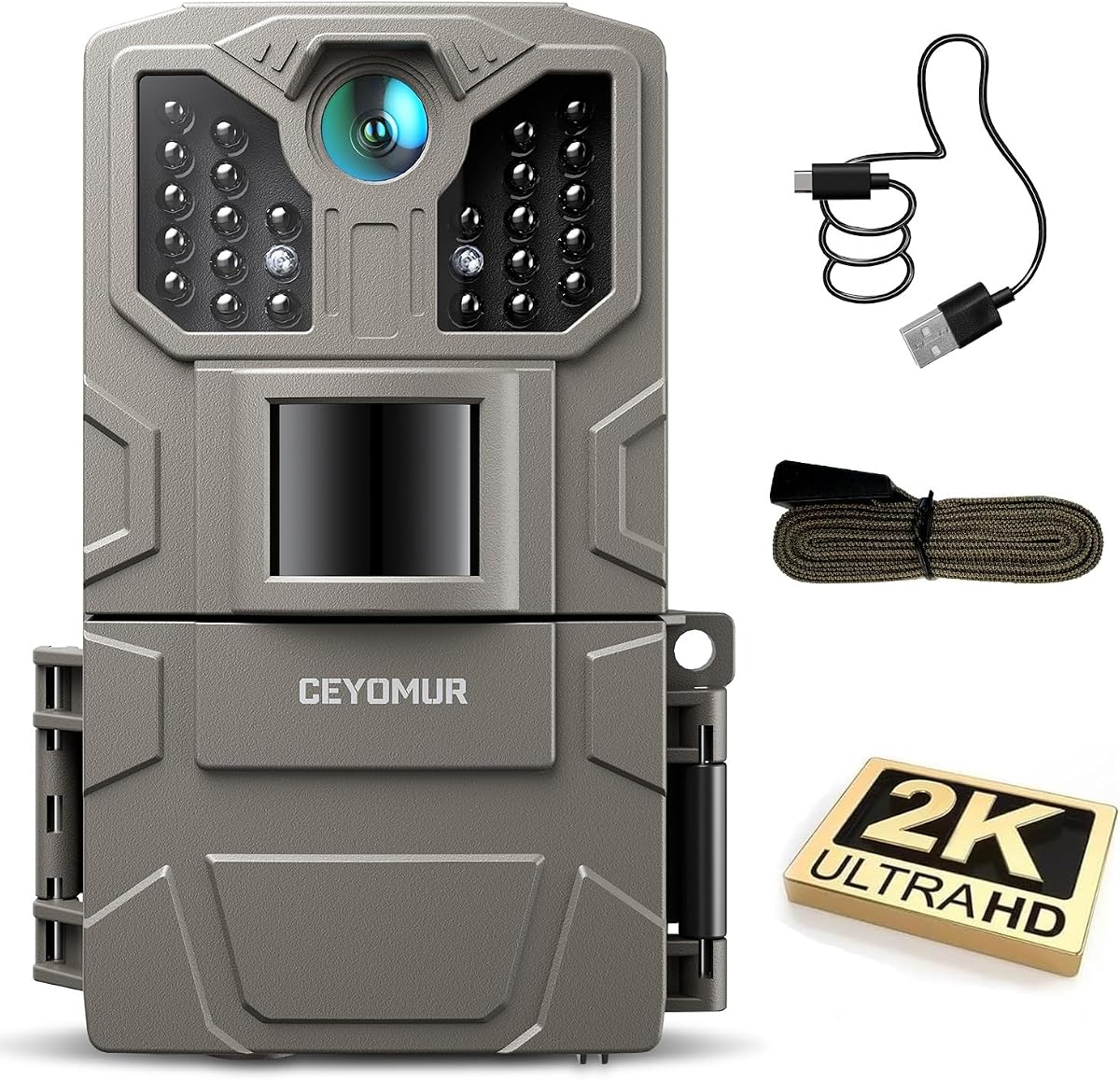
CEYOMUR Trail Camera 36MP HD Trail Cam with Night Vision Motion Activated
4.0Editor score
Affordable entry-level
Fast trigger speed
Simple setup
This guide compares the top battery life trail camera models for 2026, analyzing power efficiency, solar options, and deployment longevity for outdoor
Choosing a trail camera with exceptional battery life is essential for consistent wildlife monitoring. Long-lasting power ensures your device captures critical moments without frequent interruptions for battery replacement or maintenance.
We evaluated ten top-rated models based on power efficiency, sensor technology, and real-world performance. Our analysis focuses on how each camera handles extended outdoor deployment in varying weather conditions.
Each selection highlights unique strengths for different needs. Prices and availability change frequently, so verify current details before purchasing to ensure you get the best value for your specific monitoring goals.
4.0Editor score

4.2Editor score

4.3Editor score
The following comparison table details the key specifications and performance metrics for each of the ten selected trail cameras to help you evaluate their power efficiency and features.


This solar-powered trail camera stands out for its exceptional battery efficiency. With a built-in rechargeable battery and solar charging capability, it offers continuous power for extended monitoring periods.
We may earn a commission when you buy through this link, at no additional cost to you.
The camera features 64MP photo resolution and smooth 4K video capture. Its integrated solar panel provides uninterrupted power, making it ideal for remote locations where battery swaps are difficult.
While the WiFi hotspot is limited to 55ft and does not connect to home networks, this limitation protects local privacy. The lack of cellular connectivity keeps costs low but requires manual retrieval.
For users prioritizing battery longevity and ease of maintenance, this model is highly recommended. Its durable design and smart features make it a top choice for wildlife monitoring.
The built-in solar panel charges the 6000mAh battery continuously, ensuring the camera remains operational even during cloudy days with minimal interruption.
Users can view and download media directly via the free app. This eliminates the need to remove SD cards for routine checks within the camera range.
We may earn a commission when you buy through this link, at no additional cost to you.
The Moultrie Edge 3 offers premium features for serious wildlife watchers. Its cellular connectivity allows real-time alerts and remote control via the app, making maintenance easier than standard cameras.
We may earn a commission when you buy through this link, at no additional cost to you.
Battery life is enhanced through rechargeable lithium packs and compatible solar panels. This system minimizes physical trips to the site, which is vital for protecting property boundaries.
The AI buck detection feature saves memory and battery by filtering out false alerts. However, users must budget for ongoing service fees to maintain full functionality.
This camera is ideal for those who need reliable remote access and advanced analytics. Its robust build ensures it performs well in various outdoor conditions.
Users can adjust settings and monitor battery status remotely via the app. This feature reduces the need for physical visits to the camera site.
The system supports rechargeable batteries and solar panels, significantly extending operational time compared to standard alkaline batteries.
We may earn a commission when you buy through this link, at no additional cost to you.
The CEYOMUR camera is an excellent entry-level choice for basic monitoring. It balances affordability with decent performance, making it accessible for users new to trail cameras.
We may earn a commission when you buy through this link, at no additional cost to you.
Its 36MP sensor captures clear images, and the fast trigger ensures you catch moving wildlife. The integrated design simplifies installation, allowing quick adjustments in the field.
While it lacks advanced connectivity options, this helps conserve power and keeps costs down. The low power consumption contributes to reasonable battery life with standard AA cells.
For beginners needing a straightforward tool, this camera is highly effective. It delivers reliable results without the complexity or expense of premium models.
The integrated design puts controls on one side, making adjustments simpler. This feature reduces the time needed for setup in the field.
With 36MP resolution and infrared night vision, this camera captures detailed images day and night, suitable for general wildlife observation.
We may earn a commission when you buy through this link, at no additional cost to you.
This WOSPORTS model offers high-resolution imaging suitable for detailed wildlife analysis. Its 64MP sensor captures clear photos, and the 4K video provides smooth recording for active scenes.
We may earn a commission when you buy through this link, at no additional cost to you.
The no-glow night vision minimizes disturbance to animals while ensuring clear footage. With support for solar panels, users can extend monitoring periods significantly without frequent battery swaps.
The 120-degree detection range ensures broad coverage of your property. While it lacks direct WiFi, the SD card retrieval process remains straightforward for most users.
For those needing high quality without cellular costs, this is a solid choice. Its flexibility in power options makes it adaptable to various outdoor environments.
The 64MP resolution and 4K video capability provide sharp, detailed images. This helps in identifying species and tracking specific animal behaviors accurately.
Support for solar panels allows for extended operation. This flexibility is key for maintaining continuous monitoring in remote locations without power.
We may earn a commission when you buy through this link, at no additional cost to you.
The Meidase P70 is designed for efficiency and quick response. Its 0.1s trigger speed ensures that fast-moving deer are captured with precision and minimal blur.
We may earn a commission when you buy through this link, at no additional cost to you.
Video files are compressed using H.264 technology, saving storage space and allowing longer recording sessions. This optimization contributes to overall battery efficiency during high-volume recording.
The camera is solar-ready for users who want to minimize battery changes. Its waterproof rating ensures it can withstand harsh weather conditions without compromising performance.
For hunters prioritizing speed and storage efficiency, this model is excellent. It delivers reliable results with features that cater to active wildlife observation.
Using H.264 compression allows more video to be stored on a single SD card. This reduces the frequency of SD card changes in the field.
The side sensors detect motion instantly, ensuring that even the fastest wildlife is captured in sharp focus every time.
We may earn a commission when you buy through this link, at no additional cost to you.
This mini trail camera is designed for portability and ease of use. Its small size makes it easy to install in tight spaces or conceal effectively in dense vegetation.
We may earn a commission when you buy through this link, at no additional cost to you.
Powered by 4 AA batteries, it maintains a low power footprint compared to larger models. This design choice extends standby time, allowing for longer periods between changes.
While it lacks high-resolution specs, the 30MP output is sufficient for most monitoring needs. The waterproof feature helps it survive typical outdoor weather conditions.
For casual users who need a discreet device, this camera works well. It offers reliable performance without the bulk of full-size models.
Weighing only 0.73lb, this camera is easy to carry and install in remote areas. Its compact form factor helps it blend into the environment.
The low-power design supports longer standby time. This feature is ideal for users who prefer fewer maintenance trips to the site.
We may earn a commission when you buy through this link, at no additional cost to you.
The GardePro E5S is built to withstand harsh outdoor environments. Its IP66 waterproof rating ensures it can handle rain and snow without damage, ensuring long-term durability.
We may earn a commission when you buy through this link, at no additional cost to you.
Battery life is optimized through low-power operation and optional solar panel support. This allows for continuous monitoring in remote areas where power access is limited.
With three PIR sensors and 0.1s trigger speed, it captures wildlife accurately. The high-resolution images help identify specific animals without the need for cellular data.
For rugged outdoor use, this camera is a reliable tool. Its focus on physical durability and power efficiency makes it a strong contender for serious hunters.
The weather-resistant build ensures the camera works reliably in snow and rain. This durability is essential for long-term outdoor placement.
Three PIR sensors ensure accurate detection. This reduces false alarms and helps conserve battery by only triggering on real movement.
We may earn a commission when you buy through this link, at no additional cost to you.
This 2-pack kit offers a practical solution for covering multiple sites. Each camera provides decent performance for general wildlife monitoring at an accessible price point.
We may earn a commission when you buy through this link, at no additional cost to you.
The low power consumption ensures reasonable battery life. This is crucial for users who need to monitor multiple spots without replacing batteries daily.
Included SD cards reduce setup time and immediate costs. However, the lower resolution may not suit those needing detailed forensic analysis.
For property monitoring across a wide area, this kit is efficient. It balances cost with functionality, making it a great start for new users.
Two cameras allow monitoring of different locations simultaneously. This ensures you can track animal paths between key spots.
Each camera comes with an SD card, ready for immediate use. This convenience saves time and extra purchasing steps.
We may earn a commission when you buy through this link, at no additional cost to you.
The 4-pack kit provides extensive coverage for large properties. Each camera is compact and efficient, designed to minimize power usage while delivering reliable footage.
We may earn a commission when you buy through this link, at no additional cost to you.
Included batteries and SD cards make this a ready-to-go package. This eliminates immediate accessory costs, allowing you to start monitoring right away.
While the specs are basic, the low power design ensures decent battery life. It suits users who need wide-area monitoring without complex connectivity.
For those needing maximum coverage on a budget, this option is compelling. It offers practical value for general security and wildlife tracking.
Batteries and SD cards included mean no extra purchases. This complete setup helps you start monitoring immediately.
The low power design reduces battery drain. This is beneficial for long deployments where maintenance is difficult.
We may earn a commission when you buy through this link, at no additional cost to you.
This 2-pack offers the high specs of the E5S model for wider coverage. The 64MP photos ensure sharp details, and the solar compatibility extends operational time.
We may earn a commission when you buy through this link, at no additional cost to you.
Support for large storage allows longer recording between SD card retrievals. This efficiency reduces physical trips and keeps power usage optimal over time.
The cameras are rugged and waterproof, ensuring reliability in harsh conditions. Their low-power operation helps maintain battery life even with frequent triggers.
For large property owners needing quality monitoring, this is a solid option. It balances performance with practical deployment options.
Two cameras allow for broader area monitoring. This ensures you capture movement patterns across multiple zones.
Support for up to 512GB SD cards means extended recording time. This reduces the frequency of SD card checks.
We may earn a commission when you buy through this link, at no additional cost to you.
Selecting a trail camera with optimal battery life requires understanding your specific needs. Several key factors influence how long a camera can last in the field without requiring maintenance.
Battery life depends heavily on whether the camera uses disposable AA cells, rechargeable lithium packs, or solar charging. Solar options reduce the need for frequent battery swaps, while lithium batteries last longer in cold weather. Consider your location's access to sunlight and your willingness to change batteries.
Choose solar for remote sites and lithium for cold climates to maximize uptime.
Trigger speed affects how quickly the camera activates on motion. Faster triggers capture moving wildlife accurately but can sometimes trigger on false positives. A balance is key; too slow misses animals, while too fast wastes battery on wind or leaves. Opt for cameras with adjustable settings.
Adjust detection zones and speed to match local animal activity.
High-resolution images like 64MP provide detailed photos but consume more storage and processing power. For general monitoring, 30MP is often sufficient and saves battery. If you need detailed identification, higher resolution is necessary but requires frequent SD card changes. Evaluate your need for detail versus battery efficiency.
Prioritize resolution based on your identification needs.
Cellular connectivity allows remote viewing but consumes significant battery. WiFi is convenient for local access but limited in range. Non-cellular models use far less power but require physical retrieval. If you can check SD cards manually, a non-connected model will last much longer.
Avoid cellular models if battery longevity is your top priority.
An IP66 rating ensures the camera can withstand rain, dust, and extreme temperatures. A well-sealed unit prevents moisture damage which can drain batteries. Look for rugged housing that protects internal components from cold or heat, which are critical for maintaining battery efficiency in varying conditions.
Select cameras with IP66 ratings for reliable outdoor performance.
Larger SD cards reduce the frequency of physical checks. Loop recording overwrites old footage automatically, keeping the card full without needing swaps. If your camera supports high capacity, it allows longer deployment times. This indirectly saves battery by reducing the number of times you must open the unit.
Use high-capacity SD cards to minimize physical retrieval.
Night vision types like no-glow (940nm) or low-glow (850nm) affect animal disturbance and power usage. While the power difference is small, efficient IR LEDs help conserve energy. Some cameras offer color night vision which may use more power. Balance visibility with power consumption.
Choose night vision that suits your animal behavior needs.
A clear LCD screen simplifies setup, reducing the time spent powering the camera on. Intuitive menus prevent errors that waste battery. Cameras with external displays or app control allow quick checks without fully powering on. This efficiency helps maintain optimal battery life over months.
Look for clear screens and easy menus for efficient setup.
Mount the camera at least 3-4 feet off the ground using the provided strap. Ensure it faces north or south to avoid sun glare affecting the sensor and battery. Test the unit briefly to check the angle before finalizing placement.
Keep the battery compartment clean and dry. Use fresh alkaline batteries or lithium packs for best performance. In cold weather, switch to lithium batteries as they handle freezing temperatures better. Avoid opening the camera unnecessarily to prevent moisture entering.
Check the SD card regularly to ensure it is functioning. Format the card periodically to prevent data corruption. If using solar panels, clean the surface to maintain charging efficiency. Proper maintenance ensures the device lasts as long as possible.
Battery life depends on usage frequency and temperature. A camera with low motion activity might last several months on AA batteries. With high activity, it may last weeks. Rechargeable or solar options extend this duration significantly, often indefinitely if power conditions are favorable.
Yes, compatible solar panels provide continuous power for cameras designed to accept them. They are ideal for remote locations. However, their effectiveness depends on sunlight availability. Ensure your camera has a port for external power input.
Drain can be caused by high sensitivity settings, too many false triggers, or extreme cold. Check your detection zone settings to avoid wind triggers. Use lithium batteries in cold weather. Also, ensure the camera is not left in test mode unintentionally.
Lithium AA batteries are best for cold weather and longevity, though they cost more. Alkaline batteries work well in moderate temperatures. Rechargeable options are eco-friendly but may require more frequent charging. Choose based on your local climate.
Most trail cameras accept AA batteries, including rechargeable ones. However, ensure the voltage matches the device requirements. Some models may require specific lithium packs for optimal performance. Always check the manufacturer manual for compatibility.
Lower the photo resolution if high detail is not needed. Reduce the number of photos per trigger. Enable power-saving modes like sleep timers. Using solar panels or external power sources also helps. Proper placement to avoid false triggers is key.
Night vision consumes power when active, but the difference is often small. Efficient IR LEDs help maintain battery life. Color night vision may use slightly more power. Overall, the impact is manageable with proper settings.
The MAXDONE Solar Trail Camera stands out for its continuous power and reliability. Its integrated solar design eliminates the hassle of constant battery swaps, making it ideal for long-term monitoring.
For those needing remote access, the Moultrie Edge 3 offers unmatched convenience with cellular connectivity. However, budget options like the CEYOMUR provide solid performance for beginners who do not need advanced features.
Consider your specific environment and power needs before purchasing. Always verify the current product details to ensure you get the best value for your monitoring needs.