
Synology DS223j
4.6Editor score
Affordable entry-level pricing
Reliable Synology DiskStation Manager
Automated backup protection
Network attached storage devices have become essential for modern households seeking private data control. A good NAS offers centralized storage, automated backups, and media streaming capabilities without relying on expensive cloud subscriptions. Finding a cheap NAS that balances cost with performance requires careful evaluation of hardware specs and software ecosystems.
We have analyzed ten top-rated NAS units and drives available in the market today. Our comparison considers processing power, network connectivity, storage scalability, and user-friendly interfaces. This list includes diskless enclosures for flexible drive choices and some all-in-one solutions for immediate setup ease.
Each pick highlights specific strengths like budget friendliness, creator tools, or enterprise-grade reliability. You will see detailed specs, pros, cons, and real-world use cases for every product. Please note that prices fluctuate frequently, so verify current deals before making your final purchasing decision for your home or office setup.
4.6Editor score

4.5Editor score

4.4Editor score
As an Amazon Associate we earn from qualifying purchases.
Below is a side-by-side comparison of all ten products analyzed in this guide. You can quickly see key specifications and pricing to decide which NAS fits your specific storage needs and budget constraints best.


The UGREEN NAS DXP2800 stands out as a top choice for users seeking powerful features without breaking the bank. With a 4.5-star rating, it delivers exceptional value for advanced home users, remote workers, and creators who need centralized data management.
We may earn a commission when you buy through this link, at no additional cost to you.
Powered by an Intel N100 Quad-Core CPU and 8GB DDR5 RAM, this unit handles heavy workloads like Docker containers and virtual machines efficiently. Its 2.5GbE networking ensures fast file transfers, while AI features help organize your photo library automatically.
While it does not include drives, this diskless design allows you to choose storage capacity based on your needs. The main trade-off is needing to purchase compatible drives separately, which adds to the initial setup cost.
If you want a NAS that grows with your digital library and supports media server apps like Plex, the DXP2800 is highly recommended. Its balance of price, performance, and features makes it the best overall pick for this roundup.
The Intel N100 CPU handles media transcoding and virtualization tasks smoothly, ideal for editing workflows.
AI recognition tags faces and scenes automatically, making it easy to find specific photos later.
We may earn a commission when you buy through this link, at no additional cost to you.
The Synology DS225+ offers a premium experience for those prioritizing reliability and software quality. Its robust media streaming capabilities and secure cloud features make it a favorite among serious home users.
We may earn a commission when you buy through this link, at no additional cost to you.
Featuring Intel hardware transcoding, it streams 4K movies to any device smoothly without extra hardware. The DSM software provides intuitive backup tools and data protection via RAID and snapshots, ensuring your files stay safe.
While priced higher than some options, the 3-year warranty and enterprise-grade security justify the cost. You must buy drives separately, but the flexibility to choose capacity helps tailor the system to your exact needs.
For users needing a robust media server with extensive camera support, the DS225+ is worth the investment. Its premium build and comprehensive feature set deliver peace of mind for data protection.
Hardware transcoding enables smooth 4K playback on multiple devices without buffering or lag.
RAID redundancy combined with snapshot tech prevents data loss from any accidental deletion.
We may earn a commission when you buy through this link, at no additional cost to you.
The UGREEN NAS DH2300 is the ideal choice for beginners seeking a private, simple storage solution. With a 4.5 rating, it proves you do not need to spend a fortune to secure your digital assets.
We may earn a commission when you buy through this link, at no additional cost to you.
Its intuitive interface and AI photo tagging help organize memories quickly. You save money over cloud subscriptions by making a one-time purchase, protecting up to 64TB of data across multiple devices efficiently.
Limitations include lack of Docker support and wired-only Ethernet, which suits basic backup needs perfectly. If you need advanced virtualization, this might be too simple, but for personal use, it is perfect.
For individuals wanting an entry-level NAS to stop relying on monthly cloud fees, the DH2300 is unmatched. Its low cost and user-friendly design make it the best budget pick in this guide.
Save thousands over ten years compared to cloud subscriptions by owning your own private cloud.
Automatic recognition of faces and locations helps you find photos instantly without manual sorting.
We may earn a commission when you buy through this link, at no additional cost to you.
The Synology DS223j brings trusted Synology reliability to a budget price point. It serves as a secure private cloud, allowing multi-platform access and easy sharing for families or individuals.
We may earn a commission when you buy through this link, at no additional cost to you.
Its automated backup protects Macs, PCs, and mobile devices effortlessly. Although it lacks heavy processing, it handles essential storage and file syncing tasks smoothly for average daily usage needs.
You will need to buy drives separately, but the low unit cost keeps overall expenses down. While not for heavy media transcoding, it is excellent for file centralization and security on a tight budget.
If you want Synology software features without the high cost, the DS223j is a smart choice. It offers reliable protection and syncing at an accessible price for entry-level users.
Synology's reputation for stable software and regular updates ensures long-term support and security.
Set-and-forget backups keep your files safe across multiple devices without manual intervention.
We may earn a commission when you buy through this link, at no additional cost to you.
The Yxk Zero1 offers high-speed networking and Docker support at a friendly price. Its compact design fits easily into home settings while maintaining privacy for all stored personal data.
We may earn a commission when you buy through this link, at no additional cost to you.
With 2.5GbE connectivity, file transfers are significantly faster than standard Gigabit models. This speed helps when streaming media or backing up large files. The Docker support adds flexibility for tech-savvy users.
As a one-time investment, it avoids monthly subscription fees entirely. You just need to purchase hard drives separately. The lightweight design makes setup easier for anyone moving from external drives to a hub.
For home users wanting fast network speeds and privacy without spending much, the Zero1 is a strong contender. It balances performance and cost well for personal storage needs.
2.5GbE ensures quick file transfers and smooth streaming without buffering or lag.
Granular permissions allow you to control exactly who sees what files on the NAS.
We may earn a commission when you buy through this link, at no additional cost to you.
The Seagate IronWolf 12TB is the top pick for users needing vast storage in a single drive. Designed specifically for NAS use, it handles continuous 24/7 operation efficiently without excessive wear.
We may earn a commission when you buy through this link, at no additional cost to you.
Its 7200 RPM speed ensures fast data access, while the integrated Health Management system keeps you informed of drive status. This drive is ideal for building large RAID arrays or storing massive media libraries.
While expensive compared to smaller drives, the capacity per unit is excellent. The included Rescue Data Recovery Services add extra value, protecting your investment against potential drive failure.
If you need to expand your NAS capacity significantly with reliability, this drive is essential. Its performance and capacity make it the best choice for high-volume storage needs.
IronWolf drives are optimized for NAS workloads to minimize failure risks and noise.
Integrated management tools help you catch potential issues before data loss occurs.
We may earn a commission when you buy through this link, at no additional cost to you.
The BUFFALO LinkStation 210 offers an easy entry point with a hard drive already included. This all-in-one approach saves time and cost for users who want immediate storage without extra purchases.
We may earn a commission when you buy through this link, at no additional cost to you.
Its RAID support adds redundancy for data protection. SSL encryption ensures secure file transfers over the network. Being made in Japan suggests high build quality, though performance is not as high as newer units.
With only one bay, expansion is limited compared to 2-bay models. But for basic backup needs, it provides a cost-effective solution with reliable hardware. Support is available locally for troubleshooting.
For users wanting simplicity and included storage without setup fuss, this LinkStation is a practical pick. It is best for those prioritizing ease of use over advanced features.
Included drives mean you can start backing up your files immediately after plugging it in.
SSL encryption ensures your private data remains secure while transferring over the network.
We may earn a commission when you buy through this link, at no additional cost to you.
The Seagate IronWolf 8TB strikes a balance between capacity and cost for most home users. It handles continuous operation smoothly with optimized performance for multi-user environments and heavy workloads.
We may earn a commission when you buy through this link, at no additional cost to you.
With up to 256MB cache, data access is quick. The integrated health monitoring and 3-year warranty ensure peace of mind. It is ideal for users needing substantial storage without the price of 12TB units.
You must purchase this separately from your NAS enclosure. Its performance and reliability justify the investment for long-term use. This drive suits general backups and media storage perfectly.
If you need reliable, mid-range storage capacity for your NAS, this IronWolf is an excellent choice. It combines speed and durability at a price point that fits many budgets.
Designed specifically for NAS enclosures to reduce wear and noise while boosting performance.
Three-year warranty and data recovery services protect your valuable stored data from loss.
We may earn a commission when you buy through this link, at no additional cost to you.
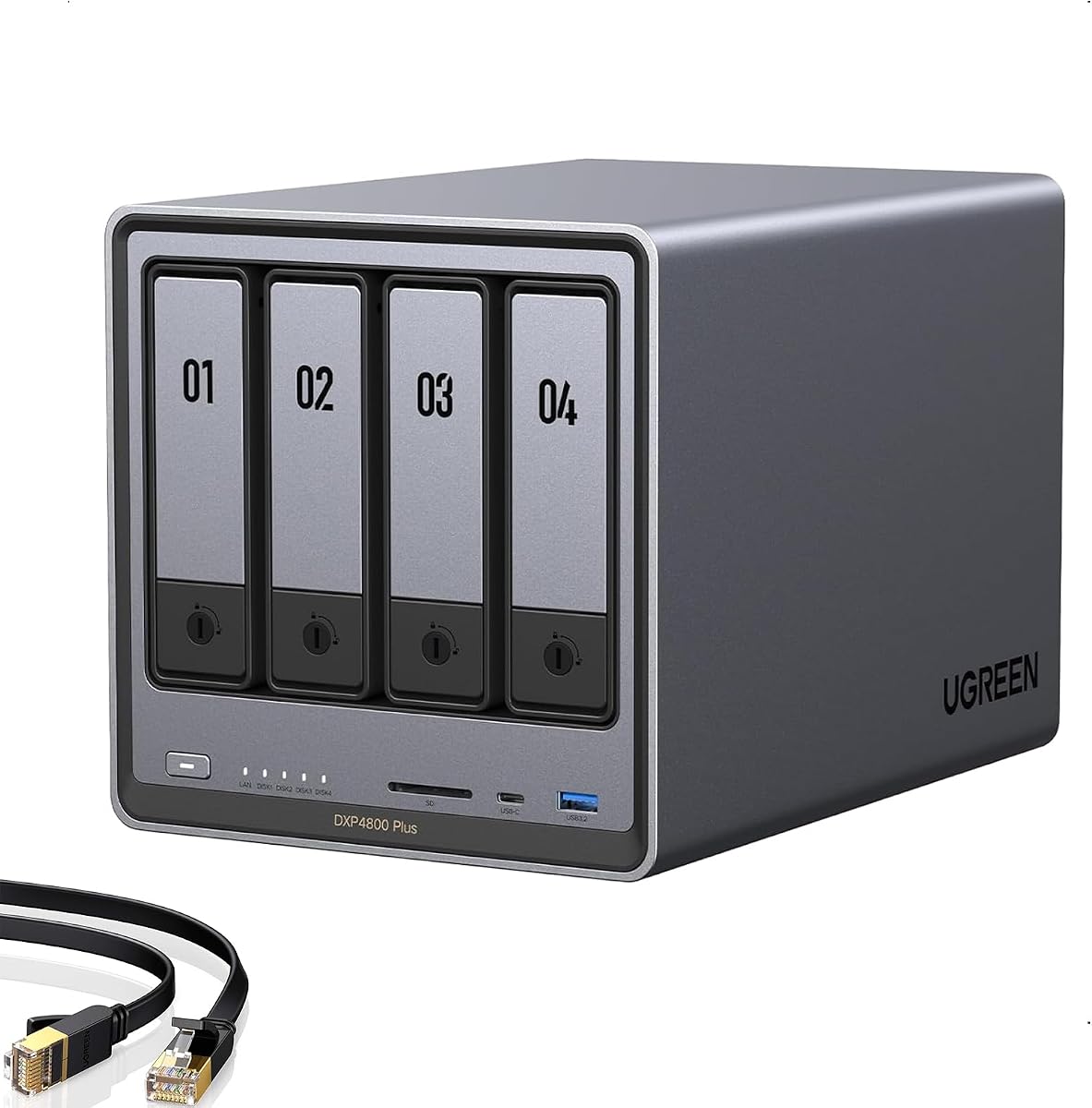
The UGREEN DXP4800 Plus is designed for families and small teams needing collaboration and speed. Its 10GbE port ensures super-fast transfers for editing projects or large data backups efficiently.
We may earn a commission when you buy through this link, at no additional cost to you.
Supporting up to 144TB capacity, it offers massive storage for growing libraries. The Docker support allows running custom apps, while AI photo tools organize media automatically for everyone.
Although pricey, the 4-bay flexibility and high-speed network justify the cost for power users. You buy drives separately, but RAID options offer protection against failures. This is a versatile choice.
For teams or families needing speed and massive storage, the DXP4800 Plus is a strong option. It balances power and usability well for advanced home environments.
10GbE networking speeds up file sharing and backups to less than a second per gigabyte.
RAID options protect data while allowing you to expand storage as your needs grow.
We may earn a commission when you buy through this link, at no additional cost to you.
The UGREEN DXP4800 Pro delivers enterprise-grade performance for professionals and developers. Its Intel Core i3 processor and DDR5 RAM handle virtual machines and Docker tasks seamlessly without slowdown.
We may earn a commission when you buy through this link, at no additional cost to you.
Dual network ports provide flexibility and speed up to 1.25GB/s. The unibody aluminum chassis ensures cooling and durability. This NAS is perfect for video editors or IT pros needing a private workstation.
It supports up to 96GB RAM and 144TB storage. While costly, it offers unmatched flexibility for advanced workflows. Drives are sold separately, but the hardware is top-tier for power users.
If you need serious performance and customization for your home lab or office, this Pro model is ideal. It sets a high standard for cheap NAS power with enterprise features.
Intel Core i3 and expandable RAM handle heavy workloads like video editing and virtualization.
Data Vault and encryption keep sensitive files safe while maintaining flexible access for users.
We may earn a commission when you buy through this link, at no additional cost to you.
Choosing the right NAS involves balancing your storage needs, performance requirements, and budget. Below are key factors to consider before buying.
Consider how much data you need now and how much you might store in the future. Most cheap NAS units come diskless, allowing you to choose drive sizes freely. Look for models that support multiple drive bays so you can upgrade later.
Always check the maximum supported capacity. Whether you pick a single-bay entry unit or a 4-bay model, ensure it handles your growth needs.
The CPU and RAM determine how well your NAS handles tasks like media transcoding or running apps. Entry-level units may suffice for basic file storage. More powerful processors help with video editing or virtualization.
For smooth performance, opt for models with at least 4GB of RAM. If you plan to run Docker or virtual machines, higher RAM and a modern CPU are essential.
Network speed affects transfer rates and streaming quality. Standard Gigabit Ethernet is common on budget models. Higher-end options offer 2.5GbE or even 10GbE ports for faster access.
Check if the NAS supports wireless connections or needs a cable. Wired is usually faster and more reliable for continuous data operations.
The operating system controls how you manage backups and access files. Popular software like DSM or UGOS offers intuitive interfaces for beginners. Look for apps that support automatic backups and media servers.
Verify if the software supports Docker or virtualization if you need custom apps. Good software reduces setup time and makes maintenance easier over the long term.
Security is critical when storing personal or business data. Ensure the NAS supports RAID options, encryption, and two-factor authentication. Automated backup tools help protect against accidental deletion.
Also consider warranty length and support availability. Brands offering data recovery services add peace of mind for valuable data.
Since NAS units run 24/7, energy efficiency matters. Look for models with low idle power and quiet fans to avoid disturbances. Compact designs fit better in living spaces.
Check if the device has sleep modes to reduce power usage when inactive. Quiet operation is especially important if placing the unit near a desk.
A solid warranty protects your investment against hardware failures. Most reliable brands offer at least two years. Check if technical support is accessible and helpful.
Look for customer service channels like online portals, guides, or phone support. Good support ensures you can resolve setup or usage issues quickly.
To start using your NAS, install compatible hard drives and connect the unit to your router via Ethernet. Download the manufacturer's mobile app or use a web browser to set up user accounts and storage pools according to your needs.
Configure automated backups for your devices using the built-in tools. Schedule backups during off-hours to avoid slowing down other tasks. Enable RAID mode for redundancy so one drive failure does not mean data loss.
Regularly check health status updates provided by the NAS software to monitor drive conditions. Keep firmware updated to ensure security patches are applied. Place the device in a well-ventilated area to prevent overheating and extend its lifespan.
A cheap NAS is an affordable network attached storage device that acts as a private cloud for your home. It lets you store files centrally, back them up automatically, and stream media without paying monthly cloud fees. Using one gives you control over your data and long-term savings.
Most cheap NAS units like UGREEN or Synology models are sold diskless, meaning you must purchase hard drives separately. However, some all-in-one options include drives for immediate use. Always check product specs before purchasing to ensure you have the right storage.
Yes, if the NAS has a capable processor for hardware transcoding. Models with Intel CPUs and 2.5GbE networking can stream 4K content smoothly to multiple devices. Entry-level units may require direct streaming without transcoding for best results.
NAS storage is safer for privacy since your data stays on your hardware and not on third-party servers. However, physical risks like theft or fire exist. You can mitigate this by keeping an offsite backup or using cloud sync services for critical files.
Most modern NAS units include remote access apps or web portals for secure connection from anywhere. Set up remote access during initial configuration and enable encryption to protect your data while traveling. Ensure your router allows necessary network connections.
An external drive connects via USB to one computer and offers limited access. A NAS connects to your network, allowing multiple devices and users to access files at once. NAS also includes features like automatic backups and RAID protection not found on standard drives.
With proper care and maintenance, a budget NAS can last several years. Hardware quality varies by brand but many come with two to three-year warranties. Regular updates and ensuring good ventilation help extend its usable life significantly.
In conclusion, the best cheap NAS depends on your specific needs and budget. The UGREEN DXP2800 offers excellent value for creators, while the Synology DS223j is great for beginners wanting reliability and simplicity.
Prioritize features like network speed, storage capacity, and software usability when making your choice. If you need power and customization, the UGREEN DXP4800 Pro provides impressive hardware. For simple backup needs, the Yxk Zero1 is efficient.
Remember that prices fluctuate regularly, so double-check current deals before purchasing. By selecting the right unit, you secure your data and save money on cloud subscriptions long term.