
Urban Worm Soil Thermometer
4.6Editor score
5 inch stainless steel stem
Color-coded tick marks
Perfect for worm bins
This expert guide compares the top 10 digital soil thermometers for gardeners, focusing on accuracy, ease of use, and features to help you choose the right
Finding the right digital soil thermometer helps you monitor temperature accurately for healthy plant growth. These tools provide quick readings without guesswork, ensuring your plants get the warmth they need to thrive in any season.
We compared ten top-rated models based on accuracy, build quality, ease of use, and extra features like moisture or pH detection. Each product was evaluated for its reliability in both indoor and outdoor garden environments to give you a clear picture.
Each pick below highlights key strengths, pros, cons, and ideal use cases so you can decide which fits your gardening style best. Please note that product availability and pricing may change over time, so check current listings before purchasing.
4.6Editor score

4.7Editor score

4.2Editor score
The following table provides a side-by-side comparison of all ten selected digital soil thermometers. Review the specifications and features to understand how each model performs in real-world gardening and composting scenarios.




The Reotemp K83B1 stands out as the top choice for gardeners who prioritize accuracy and durability. With a rating of 4.7 stars, users appreciate its reliable performance in compost piles and soil monitoring tasks. The 12-inch stainless steel stem ensures it reaches deep enough for precise readings without bending or breaking.
We may earn a commission when you buy through this link, at no additional cost to you.
Its standout feature is the inclusion of a digital composting guide, offering expert instructions on managing compost piles efficiently. The corrosion-resistant 304 stainless steel case and waterproof design make it robust against harsh outdoor conditions. Whether you are testing soil for planting or monitoring a tumbler, this tool delivers consistent results.
While it lacks a digital backlight, the clear glass lens allows for easy reading in daylight. The 32 to 178 Fahrenheit range covers most gardening needs, and the Celsius option adds flexibility for international users. The price point reflects its high quality, making it a worthwhile investment for serious gardeners.
If you need a trustworthy thermometer for composting or soil temperature checks, the Reotemp K83B1 is highly recommended. Its combination of durability, accuracy, and educational resources sets it apart from cheaper alternatives. Invest in this model for long-term reliability in your gardening toolkit.
The included digital guide offers step-by-step instructions for beginners to manage compost piles effectively.
Corrosion-resistant stainless steel and waterproof design ensure longevity even in wet or dusty conditions.
We may earn a commission when you buy through this link, at no additional cost to you.
The Urban Worm Soil Thermometer is a fantastic budget option for those focused on worm composting or small garden plots. With a 4.6 rating, users love its simplicity and clear visual indicators. The 5-inch stainless steel stem is perfect for reaching the ideal depth in worm bins without excessive digging.
We may earn a commission when you buy through this link, at no additional cost to you.
Its green, yellow, and red tick marks make monitoring temperatures effortless without needing complex numbers. Worms thrive between 55°F and 90°F, and this thermometer clearly shows when adjustments are needed. The stainless steel construction ensures it withstands moisture and organic matter in compost environments.
While it lacks a digital display, the analog design is intuitive and requires no batteries. The 5-inch depth might be limiting for deep soil testing, but it excels in its intended use cases. The affordability makes it accessible for anyone starting a worm farm or small garden.
If you need a reliable, low-cost tool for worm bins or shallow soil checks, this thermometer is an excellent pick. Its clear color coding simplifies temperature management, helping you maintain optimal conditions for worms and plants alike. It is a practical choice for budget-conscious gardeners.
Color-coded tick marks allow you to check temperatures at a glance without reading numbers.
Designed specifically for worm composting, it tracks the ideal 55°F to 90°F range accurately.
We may earn a commission when you buy through this link, at no additional cost to you.
The ECOWITT WN34BS is a premium digital sensor that offers advanced monitoring capabilities for tech-savvy gardeners. With a 4.2 rating, it appeals to users who want real-time data without constant manual checks. The 11.8-inch probe ensures deep soil access, making it suitable for farms and large gardens.
We may earn a commission when you buy through this link, at no additional cost to you.
Its standout feature is the ability to pair with a Wi-Fi gateway for live data viewing on a smartphone app. You can track temperature history, receive email alerts, and manage up to 8 channels of sensors. The IP65 waterproof rating protects the device from rain and dust in outdoor settings.
While the gateway is sold separately, the connectivity options provide unparalleled convenience for monitoring multiple locations. The long transmission range of 300 feet ensures stable signals even in open areas. However, the added cost of the gateway and the sensor itself makes it a higher-end investment.
If you prioritize remote monitoring and data logging, the ECOWITT WN34BS is a top-tier choice. Its advanced features simplify long-term soil health tracking and help optimize watering schedules based on temperature trends. It is ideal for serious growers who need precise, automated insights.
Pair with a Wi-Fi gateway to view live data and receive alerts on your smartphone.
Support up to 8 channels of sensors to track temperatures across multiple garden zones.
We may earn a commission when you buy through this link, at no additional cost to you.
The YAMRON 4-in-1 Soil Moisture Meter offers versatile monitoring by combining moisture, pH, temperature, and sunlight measurements in one device. Rated 4.2 stars, it is a strong option for gardeners who want comprehensive data without multiple tools. The backlight LCD screen ensures readability in dark or bright conditions.
We may earn a commission when you buy through this link, at no additional cost to you.
Its rotating head design allows you to adjust the display angle up to 45 degrees, reducing the need to bend over. The probe quickly measures soil conditions, providing intuitive graphics that help beginners interpret data easily. You can test up to five locations to get an average for more accurate results.
However, it requires moist soil to function correctly and cannot be used in dry or hard ground without damaging the probe. The need to wait ten minutes after watering before testing adds a step to the process. Despite this, the multifunctionality makes it a valuable addition to any plant care kit.
If you want a single tool to monitor multiple plant health factors, the YAMRON 4-in-1 is a practical choice. Its user-friendly interface and backlight display make it accessible for all skill levels. Just remember to moisten the soil before testing to ensure accurate and safe readings.
The 45-degree rotating head lets you view the screen comfortably without straining your back.
Measure moisture, pH, temperature, and sunlight intensity all with one device for complete care.
We may earn a commission when you buy through this link, at no additional cost to you.
The Moisture Meter for Plants 7-in-1 kit expands on basic testing by including fertility and water quality metrics like TDS and EC. With a 4.4 rating, it appeals to gardeners who want deep insights into soil health. The large LCD screen with backlight ensures clear visibility day or night.
We may earn a commission when you buy through this link, at no additional cost to you.
Its fertility function helps identify nutrient levels, guiding you on when to fertilize for optimal growth. The probe technology measures pH, moisture, temperature, and light intensity quickly and accurately. By averaging readings from multiple spots, you can get a reliable picture of soil conditions.
While it offers extensive features, it requires moist soil to function and should not be inserted into dry hard ground. The battery alert ensures you never miss readings due to low power. This level of detail makes it suitable for both novice and experienced growers.
If you need detailed soil fertility and water quality data, this 7-in-1 kit is an excellent choice. It combines essential plant metrics with advanced indicators to support scientific plant care. Just ensure the soil is pre-moistened to avoid damaging the probe during testing.
The fertility function helps you assess nutrient levels to guide your fertilization schedule.
Measure TDS and EC to understand water quality and its impact on soil health.
We may earn a commission when you buy through this link, at no additional cost to you.
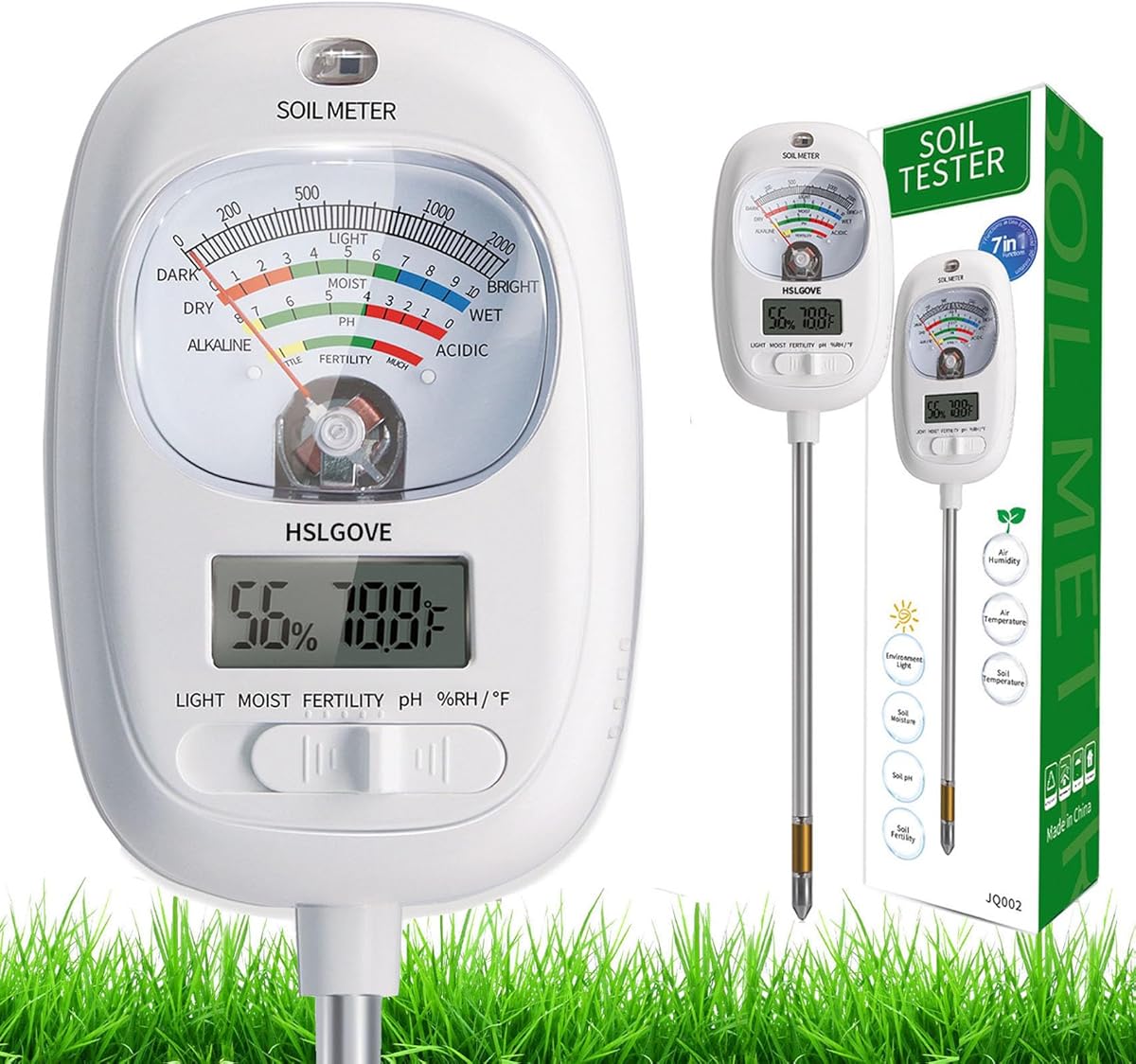
The HSLGOVE Soil Test Kit offers a unique dual-screen design that displays soil and air temperature or humidity simultaneously. Rated 4.4 stars, it is ideal for indoor and outdoor environments where ambient conditions affect plant health. The 6.8-inch probe allows for deep soil testing in medium to large pots.
We may earn a commission when you buy through this link, at no additional cost to you.
It measures moisture, pH, fertility, light, and temperature with simple button switching. The patented US utility design ensures accurate readings and durability over time. You can monitor both the soil and the air in one unit, simplifying your garden management routine.
While the battery requirement is slightly higher, the convenience of combined data outweighs the minor inconvenience. It should not be used to test liquids, and results may vary if the soil is extremely dry. The comprehensive data helps you fine-tune watering and fertilization schedules.
If you need to monitor both soil and air conditions efficiently, this HSLGOVE kit is a great option. Its dual display saves time and provides a holistic view of your growing environment. Just ensure you use fresh batteries for consistent performance.
View soil and air data on separate screens to understand the full plant environment.
Seven functions cover all essential plant needs from moisture to light intensity.
We may earn a commission when you buy through this link, at no additional cost to you.
The Digital Soil EC Meter is designed for gardeners who need precise electrical conductivity readings to manage soil nutrients. Rated 4.1 stars, it offers professional-grade accuracy with automatic temperature compensation. The backlight LCD display ensures you can read values clearly in any lighting condition.
We may earn a commission when you buy through this link, at no additional cost to you.
Its corded sensor probe with IP67 rating is durable and waterproof, suitable for wet soil testing. The ATC function adjusts for temperature changes, ensuring reliable readings in different climates. You can calibrate it easily using a standard solution for consistent long-term performance.
While it is specialized for EC and nutrient testing, it may not be necessary for casual gardeners. The need for a calibration solution adds a step to setup. However, for hydroponics or high-performance farming, this level of precision is invaluable.
If you need to track soil conductivity and nutrient levels accurately, this EC meter is a top choice. Its professional features ensure you avoid over-fertilization and maintain optimal soil conditions. Invest in this tool for serious agricultural or gardening applications.
Automatic temperature compensation adjusts readings for consistent accuracy across varying soil temps.
Measure electrical conductivity to understand soil salt levels and nutrient availability.
We may earn a commission when you buy through this link, at no additional cost to you.
The 4-in-1 Soil Moisture Meter offers wireless convenience with a range of up to 328 feet. Rated 4.5 stars, it allows you to check plant conditions from anywhere without bending or walking to every pot. The large screen display shows all essential data at once.
We may earn a commission when you buy through this link, at no additional cost to you.
Its triple-probe TDR technology ensures stable and consistent readings across multiple contact points. You can insert the probe once and leave it for continuous monitoring without disturbing roots. A single display can connect up to 12 sensors, making it scalable for large collections.
While the initial cost includes one sensor, expanding the system requires additional purchases. The batteries need occasional replacement, but the convenience of remote monitoring is unmatched. The wireless alerts help you react quickly to dry or wet conditions.
If you want to monitor plants from indoors or without constant effort, this wireless meter is ideal. Its TDR technology ensures reliability, and the scalable design supports growing gardens. Just ensure you keep extra batteries and sensors on hand for full coverage.
Monitor plants up to 328 feet away, saving time and physical effort.
Insert the probe once and track changes over time without repeated testing.
We may earn a commission when you buy through this link, at no additional cost to you.
The Luster Leaf 1625 Digital Soil Thermometer is a straightforward tool for determining soil temperature during early planting. Rated 4.2 stars, it is a must-have for gardeners who need to know exactly when to transplant. The digital display provides clear, easy-to-read temperature values.
We may earn a commission when you buy through this link, at no additional cost to you.
Its simplicity is its strength, focusing solely on accurate temperature measurement without unnecessary features. The probe inserts easily into the soil to give quick results for transplanting decisions. This reliability helps avoid frost damage or premature planting that could harm your crops.
While it lacks extra functions like moisture or pH testing, its focused purpose ensures consistent performance. It is an affordable option for those who already have other testing tools. The compact design makes it easy to carry in a garden toolbox.
If you need a reliable tool specifically for seasonal planting and transplanting, this Luster Leaf model is effective. Its accuracy ensures your crops start in optimal conditions. Keep it handy during spring and fall to maximize your planting success.
Check soil temps before transplanting to protect young plants from cold shock.
Simple digital reading eliminates guesswork when planning your garden schedule.
We may earn a commission when you buy through this link, at no additional cost to you.
The 7 in 1 Soil Meter offers robust testing for large gardens with its five-probe system. Rated 3.9 stars, it provides fast and accurate results for pH, sunlight, fertility, and temperature. The split HD display allows for easy reading without bending down, ideal for seniors or fieldwork.
We may earn a commission when you buy through this link, at no additional cost to you.
Its heavy-duty probes resist corrosion and can withstand compacted soil, making them durable for commercial or extensive use. The system is expandable with independent probes for distributed monitoring across wide areas. This scalability makes it suitable for farms and large greenhouses.
While pH testing requires moist soil and patience, the overall package offers excellent value for serious growers. The split design ensures you can see multiple data points simultaneously. Just ensure you calibrate and maintain the probes for best results.
If you manage a large garden or farm and need comprehensive data, this 7-in-1 kit is a strong choice. Its durability and expandability support long-term soil management. Take time to follow calibration tips to maintain accurate readings over time.
Corrosion-resistant probes handle tough soil conditions without losing sensitivity.
Add independent probes to monitor multiple locations across your farm or garden.
We may earn a commission when you buy through this link, at no additional cost to you.
Selecting the right digital soil thermometer depends on your specific gardening needs and the environment you manage.
Accuracy is critical when monitoring soil temperatures for planting or composting. Look for models that use high-quality sensors and offer temperature compensation to adjust for environmental changes. Professional-grade meters often come with calibration options to ensure long-term reliability.
Choose a thermometer that offers consistent readings across multiple tests to avoid misjudging soil conditions.
The length and material of the probe determine how deeply you can measure and how durable the tool will be. Stainless steel probes resist corrosion and are ideal for damp compost or moist soil environments. Longer probes are necessary for deep soil testing in large gardens or farms.
Ensure the probe length matches your needs and that the material can withstand regular outdoor use.
A clear, readable display is essential for quick and accurate data interpretation. Look for models with backlighting if you garden in low-light conditions or during early mornings. Digital displays are generally easier to read than analog dials, especially for users with vision challenges.
Select a display size and interface that allows you to read data comfortably without strain.
Many modern thermometers offer additional features like moisture, pH, and light intensity monitoring. These multifunctional devices provide a holistic view of soil health but may cost more. Decide if you need these extra features or if a dedicated temperature tool is sufficient.
Balance the cost against the value of added data to avoid unnecessary complexity.
Garden tools face exposure to moisture and dust, so waterproof ratings are important for longevity. Look for IP65 or IP67 ratings to ensure the device can withstand rain or wet soil without damage. Durable construction prevents breakage when inserting into compacted or rocky soil.
Prioritize models with robust casing to protect internal electronics from environmental hazards.
Premium models may offer Wi-Fi or Bluetooth connectivity for remote monitoring and data logging. These features allow you to receive alerts when temperatures fall outside ideal ranges. While more expensive, they save time and help automate care schedules for larger gardens.
Consider connectivity options if you need real-time data access or want to track temperature trends over time.
To get accurate readings, insert the probe into the soil at the desired depth and wait for the display to stabilize. For pH testing, ensure the soil is moist, as dry soil can damage the probe and skew results. If the soil is too hard, pre-moisten the area and wait ten minutes before testing.
Clean the probe after each use to remove soil and organic matter that could affect accuracy. Wipe it with a damp cloth and store it in a dry place to prevent rust or corrosion. Regular cleaning ensures consistent performance and extends the life of the device.
Check the battery status regularly and replace them when the low battery alert appears. Using fresh batteries ensures the display and sensors function correctly. Store the thermometer in a protective case or pouch when not in use to avoid accidental damage.
Most digital soil thermometers require moist soil to provide accurate readings and prevent sensor damage. Dry or hard soil can lead to false values or harm the probe. It is best to water the test area and wait ten minutes before inserting the device.
Yes, many models are specifically designed for composting with long probes and durable construction. They help you monitor the internal heat needed for effective decomposition. Always choose a compost-specific thermometer for the best results in these applications.
Check soil temperature daily during planting seasons or when managing compost piles. Regular monitoring helps you adjust watering and planting schedules based on real-time data. Consistent checks ensure your plants receive optimal growing conditions.
Some thermometers can measure water temperature, but most are designed for soil. Check the manufacturer's specifications to confirm if the device is safe for liquids. Using a soil probe in water may damage the sensor if not rated for it.
Most vegetables thrive in soil temperatures between 60°F and 75°F, but this varies by crop. Cool-season crops can handle lower temps, while warm-season ones need higher heat. Use your thermometer to confirm the soil is ready before sowing seeds or transplanting.
Wipe the probe with a soft damp cloth to remove soil and debris. Avoid using harsh chemicals or submerging the device unless it is fully waterproof. Store it in a dry place to prevent corrosion and maintain its sensitivity.
The top picks for digital soil thermometers range from simple, affordable tools to advanced, networked devices. The Reotemp K83B1 leads in durability and composting support, while the ECOWITT WN34BS excels in connectivity for smart gardens. Each model serves specific needs based on garden size and monitoring preferences.
When choosing, prioritize features like probe depth, display readability, and multifunctionality that match your gardening habits. Budget-friendly options like the Urban Worm thermometer work well for focused tasks, while comprehensive kits offer broader data. Select the tool that simplifies your workflow without adding unnecessary complexity.
Remember to verify current prices and availability before purchasing, as market conditions change frequently. Check user reviews and warranty terms to ensure you are investing in a reliable product. With the right thermometer, you can optimize your soil conditions and grow healthier plants with confidence.