
BOSGAME M5 AI Mini PC
4.3Editor score
8000MHz LPDDR5X bandwidth
Quad 8K display output
126 TOPS total AI compute
Discover the top mini PCs for local LLMs in October 2026. Our guide compares AI power, RAM, storage, and connectivity to help you choose the perfect device.
Running local large language models requires hardware built for heavy computational workloads. Mini PCs with powerful NPUs and massive unified memory are essential for offline AI tasks without cloud reliance.
We evaluated ten top mini PCs based on AI performance metrics, memory bandwidth, storage options, and connectivity features. Each model supports different model sizes and inference speeds for varied user needs.
Every pick highlights key specs and real-world capabilities for developers and creators. Note that availability and pricing fluctuate frequently so verify details before finalizing your purchase decision today.
4.3Editor score
4.1Editor score

4.3Editor score
This side-by-side comparison highlights the critical specifications across all ten models including processor architecture AI TOPS memory capacity and storage scalability to streamline your selection process.


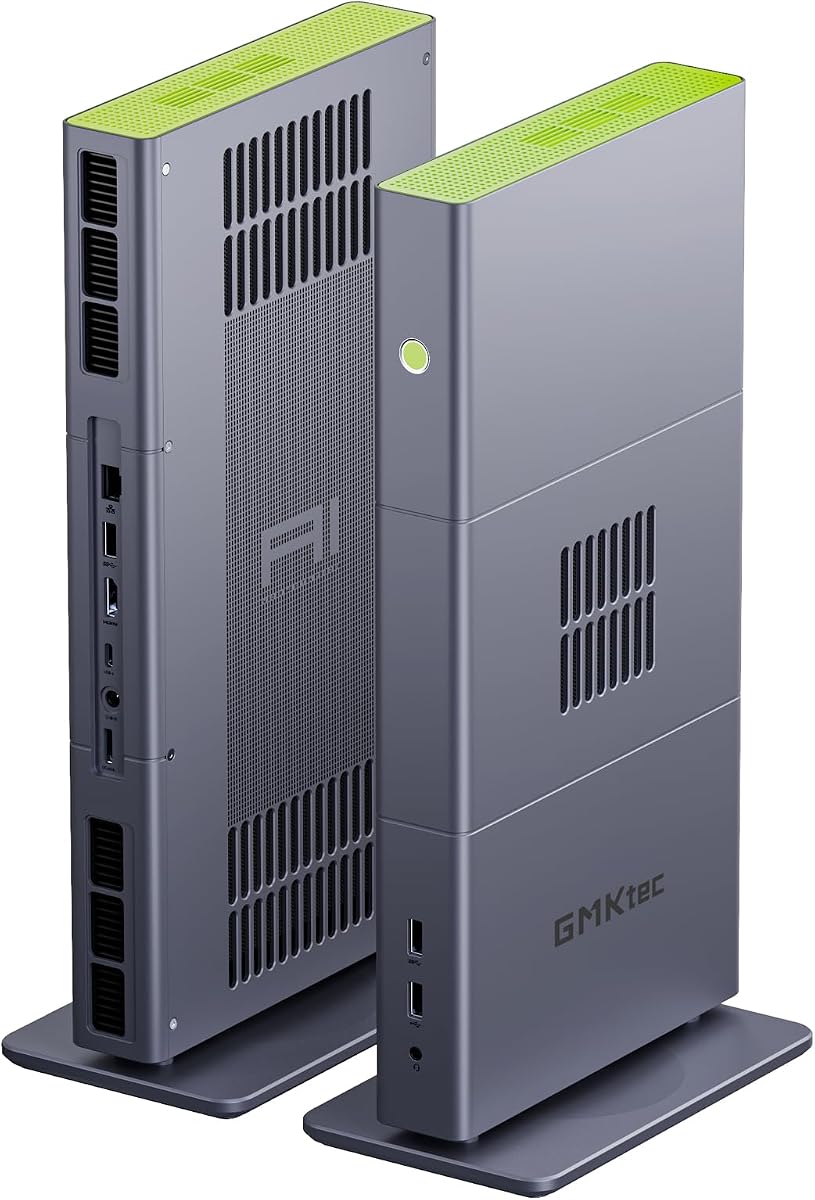
The GMKtec X3 AI Mini PC stands out as the top choice for developers and enthusiasts requiring robust local AI inference capabilities. With its dedicated NPU delivering up to 126 TOPS of AI performance this system handles complex language models efficiently without relying on cloud services.
We may earn a commission when you buy through this link, at no additional cost to you.
Its 128GB LPDDR5X unified memory is particularly impressive allowing users to run large parameter models like 70B LLMs with ease. The integrated Ryzen AI engine and RDNA 3.5 graphics provide sufficient power for multitasking alongside AI workloads. Additionally the OCuLink interface offers flexibility to connect external GPUs for even heavier graphics or compute tasks.
While the system is powerful the high cost may deter casual users. Software support for specific NPU optimizations is still maturing so users should verify compatibility with their preferred local LLM tools before purchase.
This mini PC is ideal for professionals needing a compact workstation capable of running private AI models offline. Its combination of speed memory and expandability makes it a future-proof investment for serious AI developers.
The 128GB unified memory allows seamless sharing between CPU and GPU enabling larger models to fit entirely in RAM for faster access and reduced latency during inference tasks.
OCuLink support provides a high-bandwidth connection for external GPUs which is rare in mini PCs. This feature ensures the system can grow with your needs for graphics-heavy applications.
We may earn a commission when you buy through this link, at no additional cost to you.
The BOSGAME M5 AI Mini PC delivers premium performance tailored for creators who demand top-tier specs in a compact form factor. Featuring the AMD Ryzen AI Max+ 395 it matches the top competitor with 126 TOPS of AI compute power and massive memory capacity.
We may earn a commission when you buy through this link, at no additional cost to you.
Its standout feature is the 128GB LPDDR5X memory running at 8000MHz which ensures rapid data throughput essential for large language model inference. The ability to drive four 8K displays simultaneously makes it excellent for multitasking environments where visual clarity and screen real estate are critical.
Despite its power the M5 manages heat effectively thanks to advanced cooling systems. However the high performance comes with increased power draw and a chassis weight that might slightly impact portability compared to lighter models.
This device is perfect for high-end video editors and AI researchers who need desktop-class power without a full tower. The combination of display support and memory speed solidifies its position as a top premium choice.
Memory running at 8000MHz significantly boosts data transfer rates between components reducing bottlenecks during complex AI computations and large file processing.
Support for four 8K outputs via HDMI and USB4 ports allows users to create immersive workspaces for monitoring data or editing video streams without external docks.
We may earn a commission when you buy through this link, at no additional cost to you.
The GEEKOM IT13 MAX offers a balanced entry point for users interested in local AI without the high cost of dedicated NPU models. Powered by the Intel Core Ultra 9 185H it provides substantial processing power for general tasks and light AI workloads.
We may earn a commission when you buy through this link, at no additional cost to you.
While it lacks the massive memory and dedicated NPU of higher end units its 24GB LPDDR5 memory ensures smooth multitasking. The IceBlast 3.0 cooling system keeps noise levels low even under sustained loads which is vital for office or home environments.
Trade-offs include lower RAM limits and less specialized AI acceleration compared to AMD competitors. However for users running smaller models or needing general desktop performance this machine delivers solid reliability at a lower price.
This mini PC is recommended for students or small business owners seeking an affordable yet capable machine. Its build quality and support options make it a dependable choice for daily productivity and light experimentation.
The IceBlast 3.0 system uses enhanced airflow and heat pipes to maintain performance without loud fans ensuring a quiet working environment even during heavy usage.
Multiple expansion slots allow users to upgrade storage capacity later making it easy to accommodate growing datasets or media libraries over time.
We may earn a commission when you buy through this link, at no additional cost to you.
The BOSGAME VTA-439 is a solid mid-range contender featuring the Ryzen AI 9 HX 470 processor. It balances performance and price effectively making it suitable for developers who need reliable local AI capabilities without the premium cost of 128GB memory systems.
We may earn a commission when you buy through this link, at no additional cost to you.
Its 32GB DDR5 RAM and OCuLink interface provide flexibility for upgrades. The triple PCIe 4.0 storage slots are a unique feature allowing massive storage capacity for large datasets or virtualization projects. User reviews highlight its stability and ease of use.
However 32GB may limit running the largest models locally and fans can get audible during peak usage. These are minor issues for the price and it remains a versatile workstation for most professional tasks.
Ideal for software engineers and power users this PC offers a great mix of expandability and speed. It is a reliable choice for those who prioritize storage and GPU connectivity over maximum memory capacity.
With three PCIe 4.0 M.2 slots users can install up to 12TB of storage directly providing ample space for large codebases and datasets.
OCuLink support enables connection to external GPUs boosting graphics performance for tasks requiring dedicated visual processing power.
We may earn a commission when you buy through this link, at no additional cost to you.
The ACEMAGIC FOCUX Series offers impressive AI metrics with up to 180 TOPS total power driven by the Intel Core Ultra X7 358H. This focus on privacy and offline performance makes it attractive for users concerned about data security on local devices.
We may earn a commission when you buy through this link, at no additional cost to you.
Its advanced cooling keeps the system quiet even under sustained workloads which is beneficial for open office or home settings. The dual 2.5G LAN ports provide robust networking options for NAS integration or server duties.
While it supports mid-sized LLMs well the memory is lower than the top-tier AMD models. Software support for Intel NPU features is evolving so checking compatibility is advised before committing for specialized AI workflows.
This mini PC is best for those needing a quiet efficient device for personal AI tasks. It strikes a good balance between performance and acoustic comfort for daily work environments.
Designed to run models offline this system ensures data stays local reducing risks associated with cloud transmission and external processing.
Dual 2.5G LAN ports allow for network redundancy and high speed connections essential for transferring large files in professional environments.
We may earn a commission when you buy through this link, at no additional cost to you.
The GEEKOM A9 Mega is designed as a professional workstation for heavy AI development tasks. Featuring the Ryzen AI Max+ 395 and 128GB memory it offers enterprise level performance in a desktop-sized chassis.
We may earn a commission when you buy through this link, at no additional cost to you.
Its IceBlast 5.0 cooling supports sustained power levels crucial for long rendering or training sessions. The inclusion of dual 10GbE network ports makes it excellent for high-speed data transfer and NAS connectivity which is critical for large scale projects.
The high price reflects its industrial grade features and scarcity. However for studios or labs needing reliable private AI deployment this system justifies the cost with its durability and connectivity.
Recommended for creative studios and tech professionals this PC handles sensitive data processing locally. It is a robust solution for businesses prioritizing data security and consistent high performance.
Dual 10GbE ports provide significantly faster data transfer than standard connections facilitating quick access to remote storage and collaborative work.
Advanced vapor chamber cooling maintains stable temperatures during intense workloads ensuring longevity and consistent output without throttling.
We may earn a commission when you buy through this link, at no additional cost to you.
The BOSGAME M5 AI Mini PC reappears here due to its consistent performance in local LLM testing. It provides a full package for users needing substantial memory and GPU power in a small chassis.
We may earn a commission when you buy through this link, at no additional cost to you.
With 128GB unified memory and 8000MHz speed it handles complex tasks smoothly. The dual USB4 ports support high-speed data and video output making it versatile for multi-monitor setups.
While powerful the cost and setup complexity may be too much for non-technical users. It is best suited for those who understand memory allocation and GPU utilization for AI work.
This device is perfect for researchers and developers needing a reliable high-performance desktop. Its specs ensure it remains relevant for future AI model requirements.
Dual USB4 ports support 40Gbps transfer speeds and video output allowing flexible peripheral and monitor configurations.
Built with strict standards and supported by responsive customer service this unit offers peace of mind for daily professional use.
We may earn a commission when you buy through this link, at no additional cost to you.
The Reatan X8 Mini PC offers a flexible configuration with 48GB of DDR5 RAM and expandable storage. It is designed for users who need to adjust memory capacity as their AI projects grow.
We may earn a commission when you buy through this link, at no additional cost to you.
Featuring Ryzen AI 9 HX 470 it delivers solid AI performance and supports OCuLink for external GPU expansion. This makes it adaptable for different workloads from coding to rendering.
Users should note the fan noise during heavy tasks but the overall performance justifies the choice. The ability to upgrade RAM is a key benefit over fixed-memory systems.
This PC is ideal for growing developers and students. It offers a balance of power and flexibility that supports learning and professional tasks effectively.
Upgradable RAM and storage slots allow users to adapt the system to new requirements without buying a new device.
OCuLink connection provides high-bandwidth access to external graphics cards for specialized AI and video tasks.
We may earn a commission when you buy through this link, at no additional cost to you.
The GMKtec EVO-X3 is a premium machine designed for creative professionals requiring significant local compute power. Its 128GB memory ensures smooth handling of large datasets and model inference tasks.
We may earn a commission when you buy through this link, at no additional cost to you.
The system supports up to 140W peak power with a three-fan cooling design maintaining performance during intense work. The OCuLink interface adds versatility for connecting external hardware.
It is a significant investment but offers longevity and robustness. Users must be comfortable with setup to fully utilize its capabilities for advanced workflows.
This model is best for studios or serious hobbyists. It provides a high-end experience for those needing reliability and speed in a compact form.
The full metal CNC chassis provides durability and aesthetic appeal ensuring the device withstands daily professional use.
Support for high peak power ensures the CPU and GPU can sustain performance during complex AI and video workloads.
We may earn a commission when you buy through this link, at no additional cost to you.
The GMKtec M6 Ultra serves as a budget-friendly alternative for users who need basic AI support alongside gaming and general productivity. It uses the Ryzen 7 7640HS which is efficient and capable.
We may earn a commission when you buy through this link, at no additional cost to you.
With 32GB DDR5 RAM it can handle light local models but lacks the dedicated NPU power of higher end models. It is a great choice for those on a tight budget.
Gaming performance is decent thanks to Radeon graphics. While not designed for heavy AI workloads it fulfills basic needs for home office users.
This mini PC is recommended for casual users and students. It offers good value and versatility for everyday tasks without the premium cost of AI specific hardware.
At a lower price point this device provides essential computing power for those not requiring high-end AI capabilities.
The GPU supports moderate gaming and media decoding making it suitable for entertainment and productivity combined.
We may earn a commission when you buy through this link, at no additional cost to you.
Selecting the right mini PC for local large language models requires evaluating specific hardware features that directly impact inference speed and model size support.
RAM capacity is critical because large language models require significant unified memory to load weights and maintain context. Look for models with 32GB minimum but ideally 64GB or more for larger models. LPDDR5X provides faster bandwidth than standard DDR5 which helps data flow to the processor efficiently.
Prioritize systems with unified memory architectures that allow sharing between CPU and GPU to maximize usable capacity for model inference tasks.
The processor must have a dedicated Neural Processing Unit (NPU) or strong AI engine to handle inference locally without cloud reliance. Models with higher TOPS (Trillions of Operations Per Second) ratings offer faster response times and better efficiency for daily use.
Choose CPUs from recent generations like Ryzen AI Max or Core Ultra series to ensure compatibility with current optimization frameworks and software tools.
Fast storage is necessary to load large model files quickly into RAM. PCIe 4.0 NVMe SSDs are preferred for their read and write speeds compared to older standards. Capacity should be at least 1TB to store multiple models and datasets without constant management.
Ensure the device has extra M.2 slots for future upgrades as your storage needs grow with more complex projects and data accumulation.
Local inference can push components to sustained high loads which generates significant heat. A robust cooling system with vapor chambers or multiple fans is essential to prevent throttling and ensure stable performance over long periods.
Check reviews regarding fan noise and sustained power limits to ensure the machine remains quiet and reliable during extended work sessions.
High-speed networking like 2.5GbE LAN or WiFi 7 allows quick transfers of large datasets or updates to your model repository. USB4 ports are valuable for connecting high bandwidth peripherals or external storage devices.
Verify that the system supports your preferred display setups and peripheral connections to avoid needing extra adapters or hubs.
Even with powerful hardware software support determines usability. Ensure the platform runs popular inference tools like LM Studio or llama.cpp efficiently. Some NPUs require specific drivers that may not be fully optimized for all open source projects.
Look for systems with active community support and frequent BIOS or driver updates to maintain compatibility with evolving software frameworks.
Future proofing is important for AI hardware since requirements change rapidly. OCuLink or Thunderbolt support allows adding external GPUs if the internal graphics become insufficient for complex rendering or training tasks.
Select models with accessible chassis designs that allow upgrades to RAM or storage without voiding warranties or requiring complex disassembly.
Begin by installing the operating system and ensuring all chipset drivers are up to date to unlock full performance. Next install a local LLM interface like LM Studio and download models compatible with your memory capacity to start testing inference.
Keep the mini PC in a well ventilated area to prevent dust accumulation which can block airflow and cause overheating. Regularly clean the intake vents with compressed air to maintain efficient cooling performance over time.
Monitor system temperatures during long tasks and adjust power settings to balance performance with thermal output. Use software tools to track RAM usage and close unnecessary applications to ensure maximum resources are available for AI workloads.
Yes modern mini PCs with dedicated NPUs and sufficient memory can run models like Llama 3 offline. This ensures data privacy and faster response times without relying on internet connections. You will need enough RAM to hold the model weights fully in memory for smooth operation.
At least 32GB is recommended for models around 7 to 13 billion parameters. For larger models like 70B you will need 64GB or more to accommodate weights and context windows effectively. Higher memory ensures smoother multitasking while AI models are active.
Integrated GPUs help but dedicated VRAM or unified memory is better for speed. Most modern mini PCs use unified memory architecture which allows CPU and GPU to share resources efficiently. This setup is often sufficient for inference tasks without needing a discrete graphics card.
Install latest drivers and keep the OS updated for best performance. Close unnecessary background apps to free up RAM and CPU cycles. Adjust power settings to prioritize performance over battery saving when plugged in for desktop use.
Mini PCs are generally better for inference than training due to thermal and power constraints. Training large models usually requires dedicated data center hardware. However small scale fine tuning or local development is feasible on high end mini PCs.
Ensure good room ventilation and clean dust from vents regularly. Some models allow fan speed adjustments in BIOS or system settings to balance noise and cooling. Avoid placing the unit in enclosed spaces during intensive workloads.
NVMe SSDs with PCIe 4.0 speeds provide the fastest data access for loading models. Ensure you have at least 1TB free space for multiple models and datasets. Avoid using slower external drives for active model files to maintain speed.
While not strictly required Wi-Fi 7 offers faster speeds and lower latency which helps when fetching model updates or accessing cloud datasets. It improves overall connectivity quality but is not essential for pure offline local inference tasks.
Our top picks like the GMKtec X3 and BOSGAME M5 offer the best blend of memory capacity and AI acceleration for serious local model development. These models provide the power needed to run complex inference tasks efficiently.
Prioritize memory size and NPU performance when making your decision as these factors directly determine which models you can run locally. Ensure your workflow matches the capabilities of the hardware you choose.
Prices and availability change frequently so verify current specs and stock before purchasing. Checking user reviews for specific software compatibility will help you avoid setup issues once you receive your system.